Here’s a quick overview of how they compare:
| Feature | Regular Salt (Plain) | Turmeric Salt (e.g., Vedura Turmeric Salt) | | :---------------- | :------------------------------------------------- | :------------------------------------------------------------- | | **Primary Purpose** | Pure seasoning; essential mineral | Seasoning with added flavour and potential health benefits | | **Flavour Profile** | Purely saline; sharp, clean | Saline with earthy, peppery, slightly bitter, warm undertones | | **Key Benefit** | Universal flavour enhancer; iodine source (if fortified) | Distinct flavour enhancement; presence of curcumin | | **Curcumin Content**| None | Trace to moderate, depending on blend ratio | | **Ideal Use** | All-purpose seasoning, baking, preserving | Flavouring curries, roasted vegetables, marinades, eggs |
Quick Summary
Turmeric salt offers a flavourful blend of earthy spice and salinity, providing potential curcumin benefits alongside its seasoning power, whereas regular salt serves as a pure sodium chloride seasoning. While both are essential in the kitchen, turmeric salt adds a distinct character and subtle health advantages, making the choice dependent on desired taste and nutritional focus for specific dishes.
Here’s a quick overview of how they compare:
| Feature | Regular Salt (Plain) | Turmeric Salt (e.g., Vedura Turmeric Salt) |
| :---------------- | :------------------------------------------------- | :------------------------------------------------------------- |
| Primary Purpose | Pure seasoning; essential mineral | Seasoning with added flavour and potential health benefits |
| Flavour Profile | Purely saline; sharp, clean | Saline with earthy, peppery, slightly bitter, warm undertones |
| Key Benefit | Universal flavour enhancer; iodine source (if fortified) | Distinct flavour enhancement; presence of curcumin |
| Curcumin Content| None | Trace to moderate, depending on blend ratio |
| Ideal Use | All-purpose seasoning, baking, preserving | Flavouring curries, roasted vegetables, marinades, eggs |
Understanding the Core Ingredients
To truly appreciate the distinction between turmeric salt and regular salt, it's crucial to understand their fundamental components and their roles in Indian cuisine.
Plain Salt: The Universal Seasoner
Salt, or sodium chloride, is arguably the most fundamental seasoning in any kitchen globally, and certainly in India. It's not just about taste; salt plays a vital role in balancing flavours, enhancing aromas, and even in food preservation. From a pinch in your morning poha to a generous seasoning on roasted chicken, its primary function is to provide salinity, bringing out the inherent flavours of ingredients. Most table salts are also fortified with iodine, an essential micronutrient, as recommended by public health bodies like the Food Safety and Standards Authority of India (FSSAI) to combat iodine deficiency disorders.
Turmeric: The Golden Spice
Turmeric, or _haldi_, is far more than just a spice in India; it's a cultural icon. Known for its vibrant yellow hue, earthy aroma, and slightly bitter, peppery taste, turmeric is a staple in nearly every Indian dish. Beyond its culinary applications, turmeric has been revered in Ayurvedic medicine for centuries for its anti-inflammatory and antioxidant properties. These benefits are primarily attributed to curcumin, its active compound. While traditional Indian cooking uses turmeric powder in substantial amounts for flavour and colour, its health benefits are also increasingly recognized globally.
Turmeric Salt: A Fusion
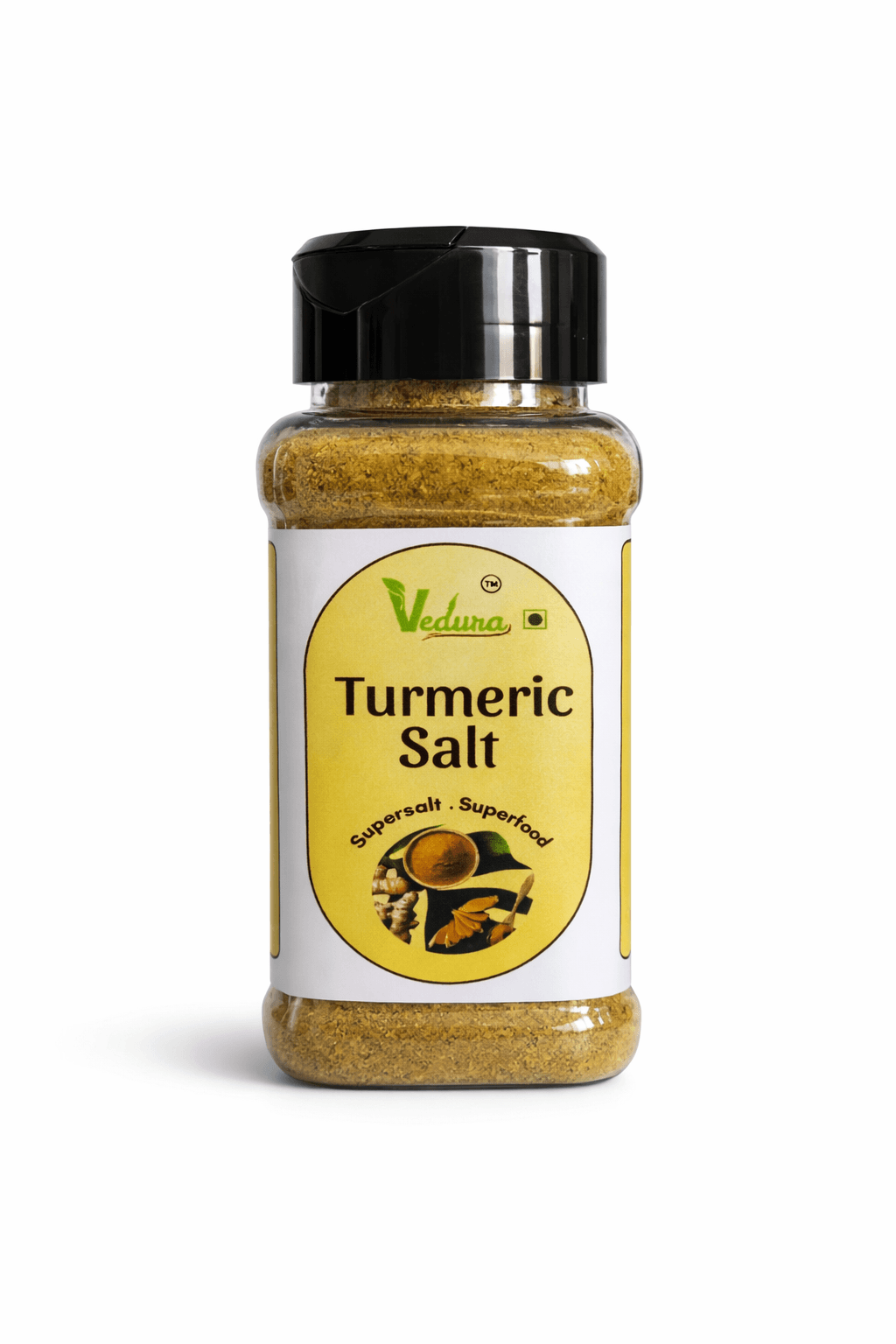
Turmeric salt is a blend of finely ground turmeric powder and salt, typically in varying ratios. It's designed to offer the best of both worlds: the essential salinity of salt combined with the distinctive flavour and subtle health advantages of turmeric. The idea is to infuse everyday dishes with a hint of turmeric without the need for an additional spice, simplifying the cooking process while adding an extra layer of flavour.
Flavour Profile: A Culinary Comparison
The most immediate difference between these two salts lies in their flavour. Regular salt provides a clean, sharp brininess that elevates and balances other tastes without introducing new ones. It’s the silent workhorse, making everything taste more like itself.
Turmeric salt, on the other hand, is an active contributor to the dish's flavour palette. When you use turmeric salt, you're not just adding saltiness; you're introducing the warm, earthy, slightly peppery, and subtly bitter notes of turmeric. This makes it particularly suitable for dishes where turmeric's flavour complements the other ingredients, such as in lentil preparations (dal), vegetable curries, marinades for poultry or fish, and even scrambled eggs. The turmeric mellows upon cooking, integrating seamlessly into the overall taste.
Nutritional Value & Health Aspects
While both salts play different nutritional roles, it's important to set realistic expectations for their health benefits.
Curcumin: The Active Compound
The primary health-related interest in turmeric salt stems from its curcumin content. Curcumin is a potent antioxidant and has well-documented anti-inflammatory properties. However, the amount of turmeric powder, and thus curcumin, in turmeric salt is typically small compared to the quantity used in traditional recipes or concentrated supplements. Therefore, while turmeric salt offers a trace amount of curcumin, it should not be considered a significant source for therapeutic benefits. For substantial curcumin intake, one would need to consume turmeric powder directly in recipes or consider specific supplements, often with bioavailability enhancers like black pepper.
Sodium Content: A Shared Concern
Both regular salt and turmeric salt are primarily sodium chloride. Excessive sodium intake is a concern for public health, contributing to conditions like high blood pressure. The Indian Council of Medical Research - National Institute of Nutrition (ICMR-NIN) consistently advises moderation in salt consumption. Whether you choose regular or turmeric salt, judicious use remains paramount for maintaining good health. The presence of turmeric does not negate the sodium content; therefore, the total quantity of salt used in cooking should always be mindful of daily recommended limits.
Everyday Use in Indian Kitchens
Choosing between turmeric salt and regular salt often comes down to the specific dish and desired outcome.
Regular salt is your go-to for almost everything. It's essential for baking, where the pure salinity is crucial for chemical reactions and taste balance. It's used for brining, pickling, and any dish where a neutral saltiness is required without altering the inherent flavours or colour.
Turmeric salt shines in dishes where its earthy notes can enhance the overall profile. Think about sprinkling it over roasted potatoes or other root vegetables before baking to get a lovely golden hue and a warm flavour. It's excellent in marinades for paneer or chicken, adding depth without needing extra turmeric powder. It's also a great way to season eggs, simple stir-fries, or even a basic cucumber salad, offering a subtle colour and a health-conscious twist. For a high-quality option that brings this balanced flavour to your table, Vedura Foods offers a finely balanced turmeric salt blend perfect for daily use: https://www.vedurafoods.com/product/turmeric-salt.
The Honest Limits: When to Choose Plain
While turmeric salt is a fantastic flavour enhancer, it's important to understand its limitations. It's not a direct replacement for turmeric powder when a recipe calls for the full colour and robust flavour of turmeric, such as in a vibrant curry or a traditional haldi doodh (turmeric milk). In such cases, the proportion of turmeric in the salt blend might be insufficient to achieve the desired intensity.
Furthermore, if you're aiming for significant health benefits from curcumin, relying solely on turmeric salt might not be effective. The amount of curcumin present in a typical serving of turmeric salt is unlikely to reach therapeutic levels. Its primary role is culinary – to add flavour and a touch of the spice's goodness, not to act as a supplement.
Who is Turmeric Salt For?
Turmeric salt is ideal for the home cook looking to:
* Simplify seasoning: Combine salt and turmeric into one easy step.
* Experiment with flavours: Introduce a new layer of warmth and earthiness to everyday meals.
* Add a touch of colour: Give dishes a subtle golden hue naturally.
* Explore mindful eating: Incorporate a hint of a beneficial spice without overhauling their diet.
It’s a thoughtful addition for those who appreciate the nuances of Indian spices and wish to integrate them conveniently into a wider range of dishes, moving beyond just traditional curries. For purists who prefer absolute control over each ingredient or those with specific dietary restrictions requiring minimal flavour interference, plain salt will always remain the primary choice.
FAQs
Q: Can turmeric salt replace turmeric powder in recipes?
A: While turmeric salt provides some turmeric flavour and colour, it generally cannot fully replace turmeric powder in recipes that call for specific amounts of the spice for its robust taste and vibrant hue. Turmeric salt is designed more as a seasoned salt to enhance flavour, not as a concentrated spice substitute.
Q: Is turmeric salt healthier than regular salt?
A: Turmeric salt offers the added benefit of curcumin from turmeric, which has antioxidant properties. However, both types of salt contain sodium, and excessive consumption of either can be detrimental to health. While turmeric salt adds a subtle health advantage, it's not a significant source of therapeutic curcumin levels.
Q: How much turmeric salt should I use?
A: You should use turmeric salt in similar quantities to how you would use regular salt, always tasting as you go. The turmeric component adds flavour, so you might find you need slightly less overall seasoning than if you were using plain salt and turmeric powder separately. Always season to your preference and dietary needs.
Q: Does turmeric salt stain food?
A: Yes, due to the natural pigmentation of turmeric, turmeric salt can impart a light yellow or golden stain to some foods, especially lighter-coloured ingredients or surfaces. This is usually a desirable effect for culinary purposes, but it's something to be aware of when seasoning, for instance, a white sauce.
Q: Are there any side effects of using turmeric salt?
A: In moderation, turmeric salt is generally safe for most people. However, individuals with allergies to turmeric or those on certain medications (like blood thinners) should consult a healthcare professional before significantly increasing their turmeric intake. As with any salt, excessive consumption can lead to high sodium intake, which has health implications.
Explore topics
Continue your Vedura journey
Explore product pages, practical recipes, and research-led explainers connected to this topic.
Comments
Be the first to comment.