Turmeric salt, on the other hand, is a relatively newer entrant, gaining popularity for its dual functionality. It combines the essential salinity of salt with the distinct flavour, vibrant colour, and potential health benefits associated with *haldi*, or turmeric. This fusion offers a convenient way to integrate turmeric into daily cooking without adding another separate ingredient.
While turmeric salt does contain curcumin, it's important to set realistic expectations. The amount of turmeric, and subsequently curcumin, in turmeric salt is typically small compared to consuming turmeric powder directly or in supplement form. According to the Indian Council of Medical Research - National Institute of Nutrition (ICMR-NIN), while turmeric is a valuable spice, its health benefits are generally observed with consistent, moderate intake as part of a balanced diet. Using turmeric salt daily can contribute a trace amount, but it shouldn't be seen as a primary source of curcumin for therapeutic purposes.
Quick Summary
Choosing between turmeric salt and regular salt often boils down to culinary intent and a subtle health consideration. While regular salt is a pure flavour enhancer, turmeric salt infuses dishes with the earthy aroma and colour of turmeric, alongside trace amounts of its beneficial curcumin compounds. This article explores their distinct roles in the kitchen, helping you decide which is better for your cooking needs.
Understanding Turmeric Salt and Regular Salt
Salt, or *namak*, is an indispensable part of Indian cuisine, fundamental to balancing and enhancing flavours. Traditionally, we've relied on plain white salt – whether iodised, rock, or sea salt – as a pure seasoning agent. Its role is straightforward: to make food taste better by intensifying existing flavours.
Turmeric salt, on the other hand, is a relatively newer entrant, gaining popularity for its dual functionality. It combines the essential salinity of salt with the distinct flavour, vibrant colour, and potential health benefits associated with *haldi*, or turmeric. This fusion offers a convenient way to integrate turmeric into daily cooking without adding another separate ingredient.
Flavour Profile: A Culinary Perspective
The primary difference between these two lies in their impact on a dish's flavour and aroma. Understanding this distinction is key to making an informed choice for your culinary creations.
Regular Salt: The Foundation
Plain salt is a pure flavour amplifier. It provides a clean, saline taste that brings out the inherent flavours of other ingredients without introducing any competing notes. Whether it's the sweetness of vegetables, the richness of a dal, or the spice of a curry, regular salt acts as a silent but powerful enhancer. Its neutrality makes it universally suitable for all types of cooking, from baking to frying, and for cuisines across the globe.
Turmeric Salt: The Aromatic Twist
Turmeric salt, by its nature, introduces a distinct character. The earthy, slightly peppery, and mildly bitter notes of turmeric become part of the seasoning. This makes it an excellent choice for dishes where the flavour profile of turmeric is welcome and desired. Think of it as a seasoning-cum-spice blend. It imparts a beautiful golden hue to food, which can be particularly appealing in dishes like pulao, roasted vegetables, or marinades. However, its specific flavour means it might not be suitable for every dish, especially those where a pure, unadulterated saltiness is paramount, such as in certain desserts or delicate broths.
Curcumin Content and Health Considerations
Turmeric is renowned for its active compound, curcumin, which has been studied for its anti-inflammatory and antioxidant properties. This is often the driving factor for choosing turmeric salt.
While turmeric salt does contain curcumin, it's important to set realistic expectations. The amount of turmeric, and subsequently curcumin, in turmeric salt is typically small compared to consuming turmeric powder directly or in supplement form. According to the Indian Council of Medical Research - National Institute of Nutrition (ICMR-NIN), while turmeric is a valuable spice, its health benefits are generally observed with consistent, moderate intake as part of a balanced diet. Using turmeric salt daily can contribute a trace amount, but it shouldn't be seen as a primary source of curcumin for therapeutic purposes.
For everyday cooking, the addition of turmeric via turmeric salt provides a convenient way to incorporate the spice's flavour and colour, with the added bonus of its subtle health-promoting compounds. It's a gentle nudge towards wellness rather than a potent medicinal dose. The Food Safety and Standards Authority of India (FSSAI) encourages the use of natural ingredients and spices, acknowledging their role in traditional Indian diets, but always within recommended dietary guidelines.
Everyday Use: When to Choose Which
The choice between turmeric salt and regular salt often comes down to the specific dish and desired outcome. Here's a comparative look:
| Feature | Regular Salt | Turmeric Salt |
| :--------------- | :------------------------------------------ | :---------------------------------------------------------------- |
| Primary Role | Essential seasoning, flavour enhancer | Seasoning with added flavour, aroma, and potential health benefits |
| Flavour | Purely saline, enhances other ingredients | Saline with earthy, slightly peppery, aromatic notes of turmeric |
| Colour Imparted | None | Yellow/Golden |
| Curcumin | None | Present (in varying amounts, depends on turmeric content) |
| Best For | Universal use, baking, delicate dishes, where pure saltiness is needed | Indian curries, dals, marinades, roasted vegetables, rice dishes, seasoning snacks |
| Cost | Generally lower | Generally higher due to added turmeric |
For instance, if you're making a simple *khichdi*, a pinch of turmeric salt could add a lovely colour and a hint of warmth. For seasoning grilled fish or roasted potatoes, it can provide an extra layer of flavour. However, for baking a cake or making a clear soup, regular salt would be the appropriate choice to maintain flavour integrity.
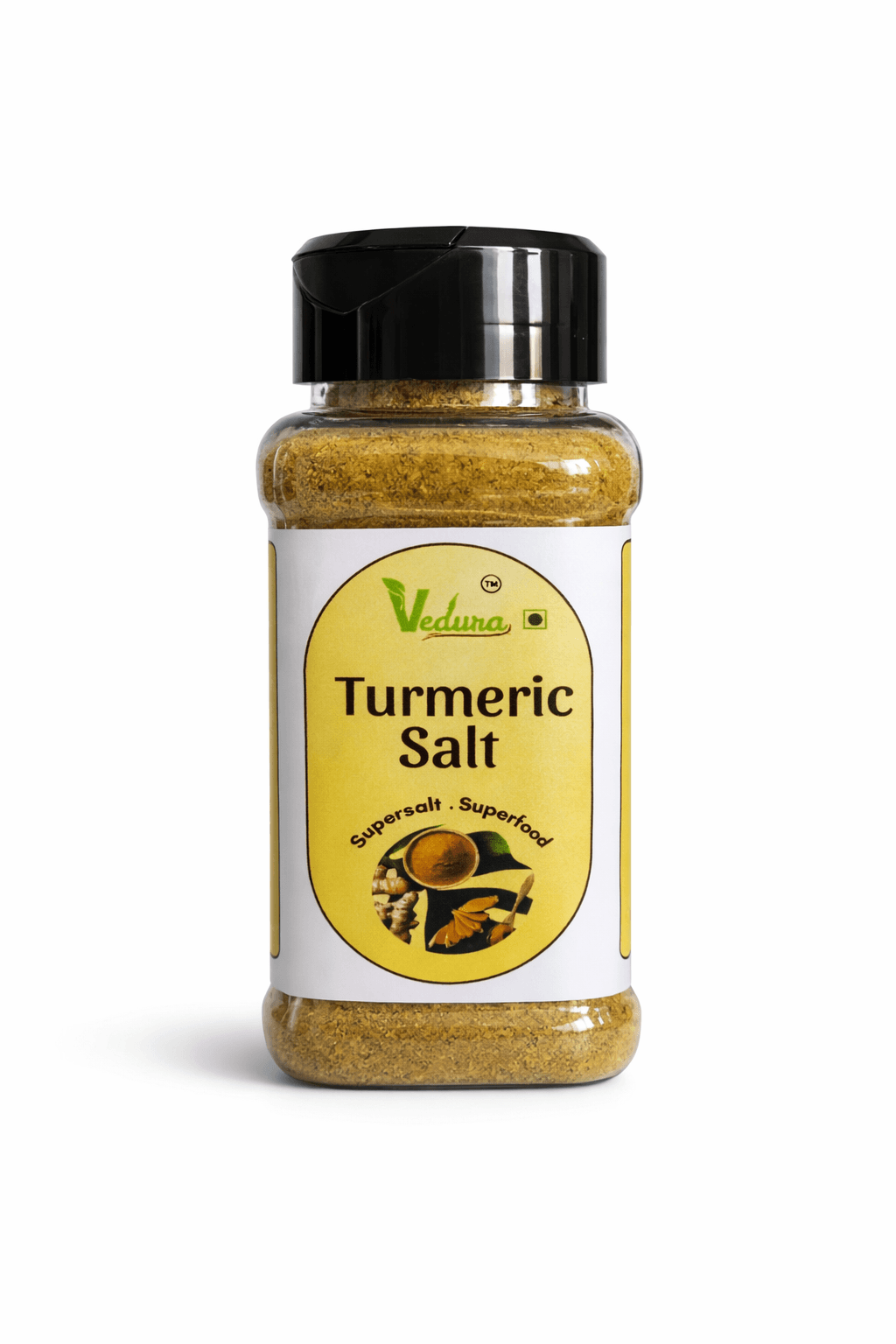
Vedura Foods offers a high-quality Turmeric Salt, crafted to bring this unique blend of flavour and goodness to your kitchen. You can explore it further at https://www.vedurafoods.com/product/turmeric-salt.
Honest Limits and Considerations
While turmeric salt offers an appealing blend of flavour and minor health benefits, it's important to acknowledge its limitations:
1. Curcumin Dosage: As mentioned, the curcumin content in turmeric salt is generally not high enough to replace therapeutic doses of turmeric. For significant health interventions, consulting a healthcare professional is advisable.
2. Flavour Compatibility: The distinct flavour of turmeric, while often desirable, is not universal. It can clash with dishes where a neutral saltiness is preferred, or in cuisines where turmeric is not traditionally used.
3. Cost: Turmeric salt is typically more expensive than plain salt due to the added processing and ingredient cost of high-quality turmeric.
4. Availability: While growing in popularity, turmeric salt might not be as widely available as regular salt in all local markets, though online options are increasing.
Ultimately, both turmeric salt and regular salt have their rightful place in a well-stocked Indian kitchen. The 'better' choice depends entirely on the specific culinary application and your personal preference for flavour and subtle wellness benefits.
FAQs
Q: Can I use turmeric salt in all my dishes instead of regular salt?
A: While you can use turmeric salt in many savoury dishes, it's not universally interchangeable with regular salt. Turmeric salt imparts a distinct earthy flavour and yellow colour, which might not be suitable for delicate dishes, baked goods, or cuisines where turmeric is not a traditional ingredient. It's best used where turmeric's flavour profile is desired.
Q: Does turmeric salt provide significant health benefits from curcumin?
A: Turmeric salt does contain curcumin, the active compound in turmeric with known antioxidant and anti-inflammatory properties. However, the amount of curcumin in a typical serving of turmeric salt is generally small. While it contributes to a healthy diet, it should not be considered a primary source for therapeutic levels of curcumin; direct turmeric powder or supplements would offer higher concentrations.
Q: Is turmeric salt suitable for people with high blood pressure?
A: Turmeric salt still contains sodium, just like regular salt. Therefore, if you are managing high blood pressure or are advised to limit sodium intake, you should use turmeric salt with the same caution and moderation as you would regular salt. The presence of turmeric does not negate the sodium content.
Q: What's the main difference in flavour between turmeric salt and plain salt?
A: Regular salt provides a pure, clean saline taste that enhances other ingredients without adding its own flavour. Turmeric salt, on the other hand, combines this saltiness with the earthy, slightly peppery, and warm notes of turmeric, adding a distinct aromatic dimension and a golden hue to your food.
Q: How much turmeric is typically in turmeric salt?
A: The percentage of turmeric in turmeric salt can vary by brand, but it typically ranges from 5% to 15% of the total mixture. This concentration is enough to impart flavour and colour, but as noted, the curcumin content per serving will still be relatively modest compared to pure turmeric powder.
Q: Can I make my own turmeric salt at home?
A: Yes, you can easily make turmeric salt at home by finely grinding dried turmeric root or using high-quality turmeric powder and mixing it thoroughly with your preferred plain salt (such as rock salt or sea salt). Ensure the turmeric is finely powdered to blend well and prevent clumps. Store it in an airtight container to maintain its aroma and prevent moisture absorption.
Explore topics
Continue your Vedura journey
Explore product pages, practical recipes, and research-led explainers connected to this topic.
Comments
Be the first to comment.