The world of Indian spices is vibrant and diverse, and few ingredients command as much attention as the humble chilli. While fresh chillies are a staple, their dehydrated, flaked counterparts offer convenience and a concentrated burst of flavour. But when faced with a choice between red chilli flakes and green chilli flakes, which should you reach for? The answer lies in understanding their distinct characteristics and how they interact with your dish.
| Feature | Red Chilli Flakes | Green Chilli Flakes | | :---------------- | :------------------------------------------------------ | :------------------------------------------------------- | | **Source** | Fully ripened red chillies | Unripe green chillies | | **Ripeness** | Mature | Immature | | **Heat Profile** | Deeper, sustained, lingering (higher capsaicin) | Sharper, more immediate, pungent (different volatile compounds) | | **Flavour Profile** | Smoky, earthy, subtly fruity, robust | Fresh, grassy, bright, piquant | | **Colour** | Vibrant red to deep reddish-brown | Muted green to greenish-brown | | **Common Uses** | Tadkas, pickles, marinades, rich curries, pizza, pasta | Chaats, raitas, stir-fries, light curries, sandwiches |
Quick Summary
Choosing between red and green chilli flakes hinges on desired heat, flavour, and visual impact. Red flakes, made from ripe, dried chillies, offer a deeper, lingering heat with smoky, fruity notes. Green flakes, from unripe chillies, provide a sharper, more immediate pungency and a brighter, grassier flavour profile. Each is best suited for different culinary applications.
The world of Indian spices is vibrant and diverse, and few ingredients command as much attention as the humble chilli. While fresh chillies are a staple, their dehydrated, flaked counterparts offer convenience and a concentrated burst of flavour. But when faced with a choice between red chilli flakes and green chilli flakes, which should you reach for? The answer lies in understanding their distinct characteristics and how they interact with your dish.
The Journey from Chilli to Flake
Both red and green chilli flakes originate from the same plant, *Capsicum annuum*, but their journey to your spice rack differs primarily in the stage of ripeness. Chilli peppers are harvested at various stages, influencing their colour, flavour, and heat. The process of making flakes typically involves drying the chillies whole, then crushing them into small pieces. This dehydration concentrates their flavour compounds and capsaicin, the chemical responsible for their heat.
Red Chilli Flakes: The Classic Heat
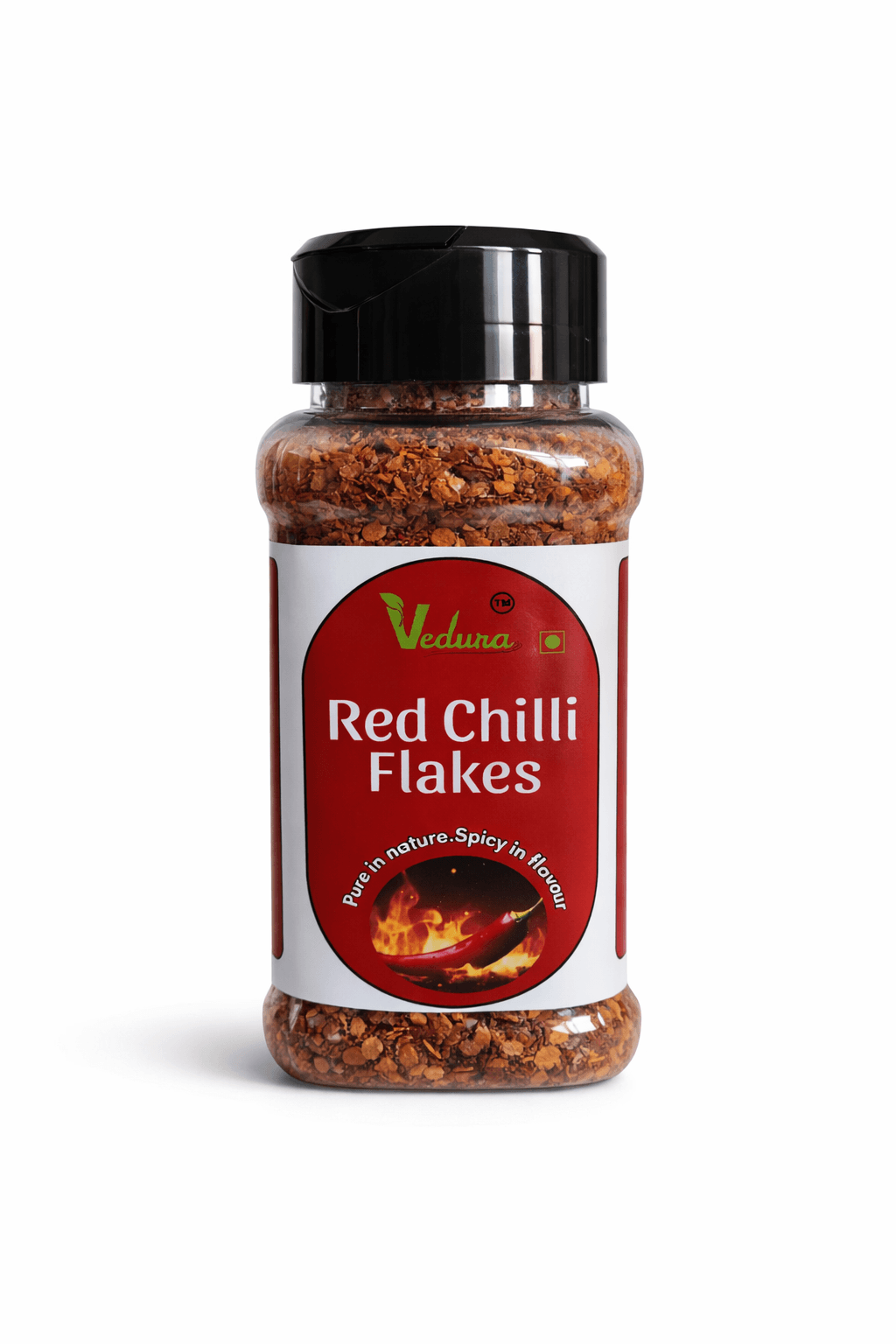
Red chilli flakes are arguably the more common of the two, instantly recognizable for their vibrant colour and often found gracing pizzas or pasta dishes worldwide. In India, they're cherished for their ability to add a robust warmth to a myriad of preparations.
Heat Profile and Flavour
Red chilli flakes are made from fully ripened chillies, which have developed a higher concentration of capsaicin. This typically translates to a more sustained, lingering heat. The drying process further enhances their flavour, imparting notes that can range from smoky and earthy to subtly fruity, depending on the specific chilli variety used. Varieties like Byadagi or Kashmiri chillies, when dried and flaked, contribute a vibrant red colour with moderate heat, while others like Guntur Sannam offer a potent punch. Vedura Foods, known for its commitment to natural Indian spices, offers premium red chilli flakes that deliver consistent heat and robust flavour.
Colour Impact
The deep red hue of these flakes is a significant visual asset, adding an appealing warmth and vibrancy to dishes. This makes them ideal for preparations where a rich colour is desired alongside the heat.
Best Uses
* Tadkas and Tempering: A staple in many Indian curries and dals for both heat and colour.
* Pickles and Chutneys: Essential for their preserving qualities and fiery taste.
* Marinades: Adds depth and a piquant kick to meats and vegetables.
* Global Cuisine: Indispensable for Italian, Mexican, and Asian dishes.
Green Chilli Flakes: Freshness with a Kick
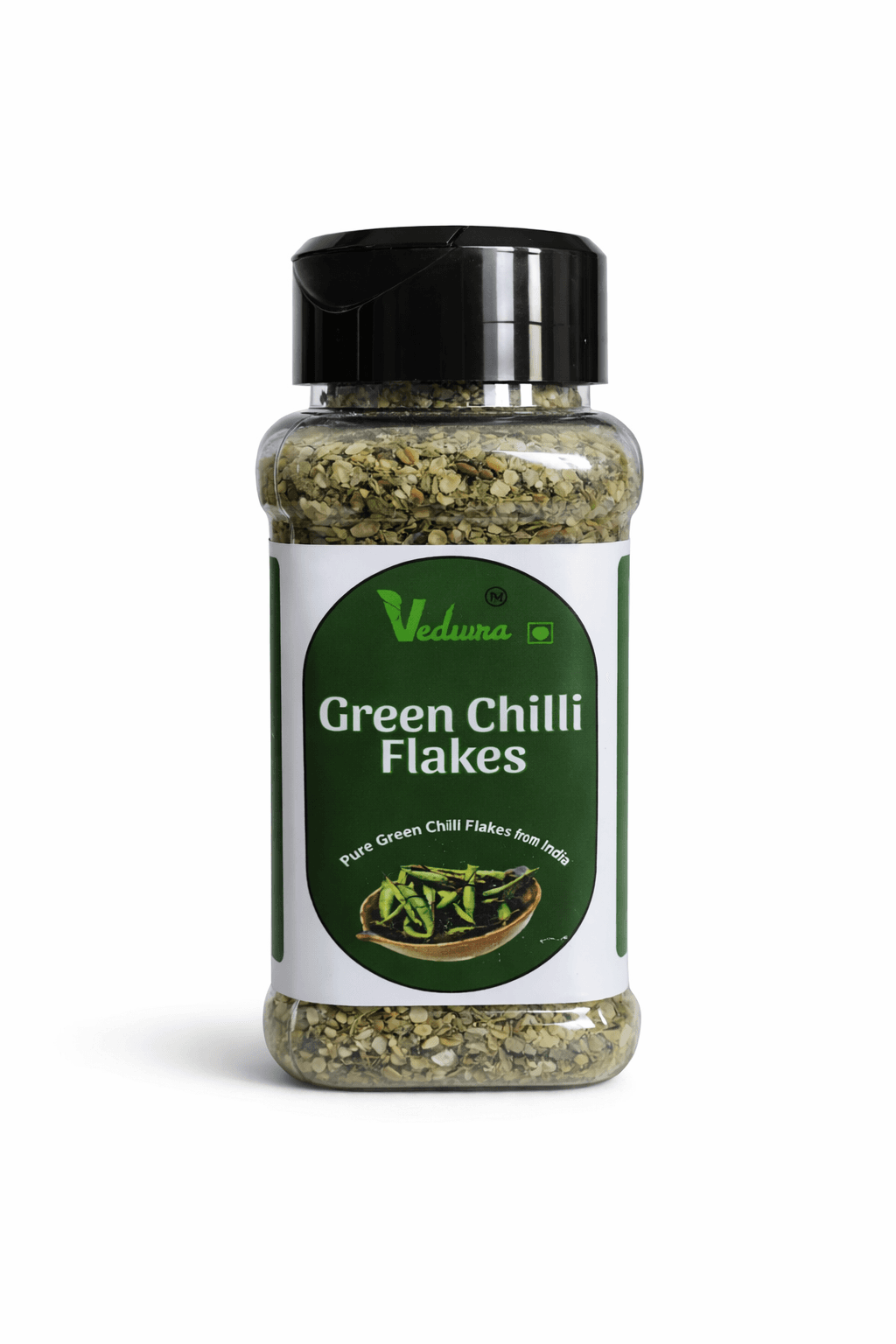
Green chilli flakes are less conventional but offer a unique dimension to cooking. They are derived from unripe chillies, harvested before they fully mature and turn red.
Heat Profile and Flavour
While green chillies are often perceived as sharper, the heat from green chilli flakes tends to be more immediate and less lingering than their red counterparts. Their flavour profile is distinctively fresh, pungent, and often described as grassy or bright. This freshness is a direct result of being processed before full ripeness, retaining compounds that give green chillies their characteristic 'zing'. According to the Spice Board of India, the volatile compounds in green chillies contribute significantly to their unique aroma and sharper initial heat perception.
Colour Impact
The muted green to greenish-brown colour of these flakes adds a subtle, earthy tone to dishes. This can be desirable when you want heat without the dominant red colour, allowing other ingredients' natural hues to stand out.
Best Uses
* Chaats and Raitas: Their fresh, sharp bite complements tangy and cool preparations.
* Stir-fries and Sautés: Adds a vibrant, immediate heat without overpowering other flavours.
* Light Curries and Dals: Offers a different kind of pungency, distinct from red chillies.
* Sandwiches and Wraps: A great way to add a fresh, spicy kick.
Red vs. Green Chilli Flakes: A Comparative Table
| Feature | Red Chilli Flakes | Green Chilli Flakes |
| :---------------- | :------------------------------------------------------ | :------------------------------------------------------- |
| Source | Fully ripened red chillies | Unripe green chillies |
| Ripeness | Mature | Immature |
| Heat Profile | Deeper, sustained, lingering (higher capsaicin) | Sharper, more immediate, pungent (different volatile compounds) |
| Flavour Profile | Smoky, earthy, subtly fruity, robust | Fresh, grassy, bright, piquant |
| Colour | Vibrant red to deep reddish-brown | Muted green to greenish-brown |
| Common Uses | Tadkas, pickles, marinades, rich curries, pizza, pasta | Chaats, raitas, stir-fries, light curries, sandwiches |
Choosing the Right Flake for Your Dish
When deciding between red and green chilli flakes, consider the overall profile of your dish:
* For robust, deeply flavoured dishes where a lingering warmth and rich colour are desired, red chilli flakes are your go-to. Think of a spicy *aloo gobi* or a hearty *rajma*.
* For fresh, bright, or tangy preparations where a sharp, immediate kick and a less dominant colour are preferred, green chilli flakes will shine. Imagine a zesty *pudina chutney* or a fresh vegetable stir-fry.
Ultimately, the choice also comes down to personal preference. Experimentation is key to discovering how each type of flake can elevate your culinary creations. The FSSAI (Food Safety and Standards Authority of India) encourages consumers to be aware of the source and quality of their spices, ensuring they are free from adulteration and retain their natural potency.
FAQs
Q: Are green chilli flakes hotter than red?
A: Not necessarily. While green chillies can feel sharper, red chilli flakes generally contain a higher concentration of capsaicin, the compound responsible for heat, leading to a more sustained and sometimes more intense lingering heat. The perception of heat can vary with the specific chilli variety and individual sensitivity.
Q: Can I substitute red chilli flakes for green and vice versa?
A: While you can substitute them for heat, the flavour profile will change significantly. Red flakes offer smoky, fruity notes, while green flakes provide a fresh, grassy pungency. Choose based on the desired flavour contribution, not just the heat level.
Q: What is the main difference in flavour between the two?
A: Red chilli flakes, from ripe chillies, have a more developed, often smoky, earthy, and sometimes fruity flavour. Green chilli flakes, from unripe chillies, offer a brighter, fresher, more pungent, and slightly grassy taste.
Q: How do I store chilli flakes to retain freshness?
A: Store both red and green chilli flakes in an airtight container in a cool, dark place, away from direct sunlight and moisture. This prevents loss of potency and flavour. For extended freshness, especially in humid climates, refrigeration can be beneficial.
Q: Are chilli flakes good for health?
A: Yes, in moderation. Chillies are rich in Vitamin C, Vitamin A, and antioxidants. Capsaicin, found in chillies, is known to have metabolism-boosting and anti-inflammatory properties. The ICMR-NIN (Indian Council of Medical Research - National Institute of Nutrition) often highlights the nutritional benefits of various traditional Indian spices.
Q: What dishes are best suited for green chilli flakes in Indian cuisine?
A: Green chilli flakes are excellent in dishes where you want a fresh, sharp kick without a dominant red colour. They work well in *chaats*, *raitas*, fresh salads, specific types of *dals*, *kadhi*, or marinades for grilled vegetables where their vibrant flavour can truly shine.
Explore topics
Continue your Vedura journey
Explore product pages, practical recipes, and research-led explainers connected to this topic.
Comments
Be the first to comment.