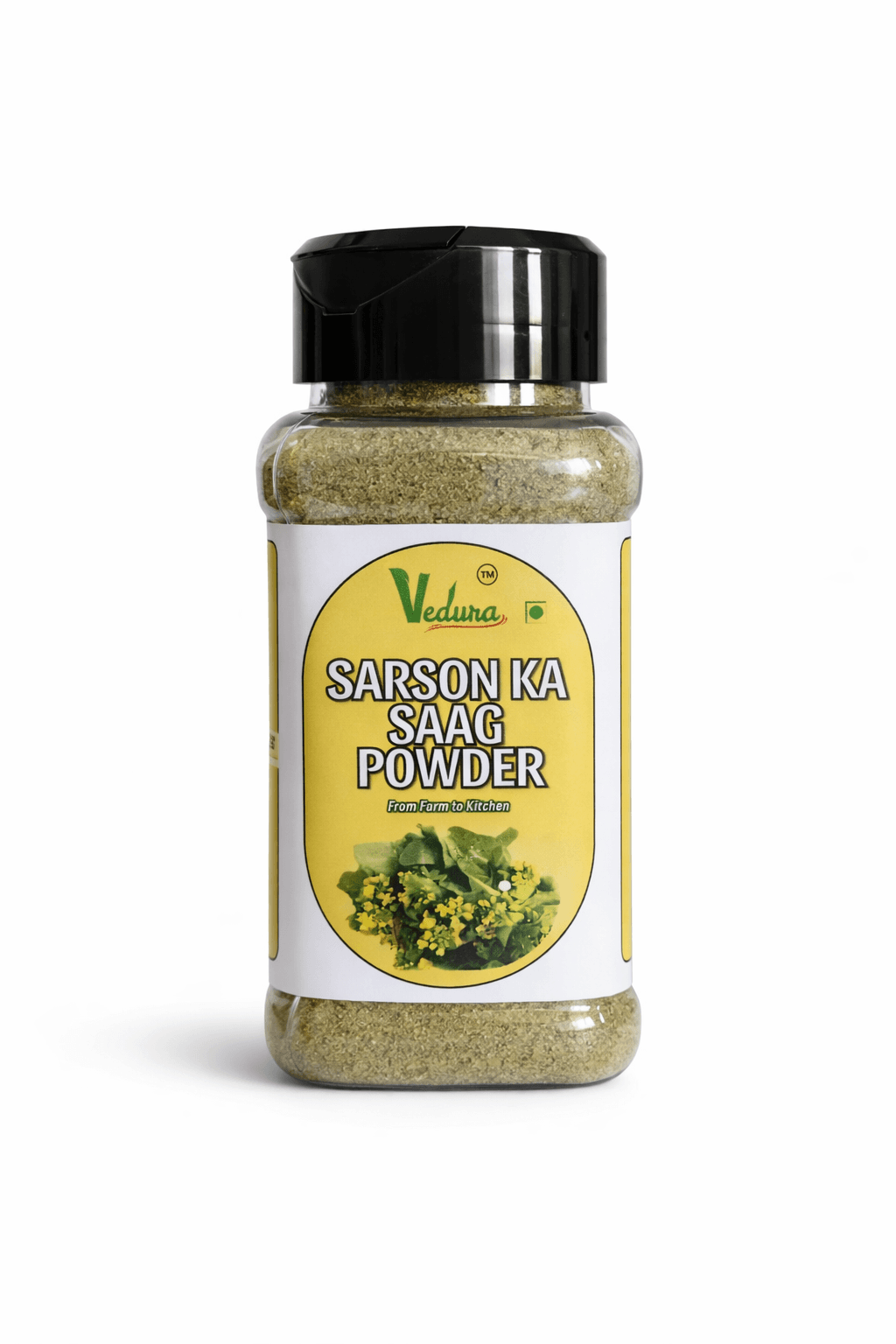
This is where dehydration steps in as a culinary game-changer. At Vedura Foods, we understand the value of tradition and the need for convenience. Our farm-gate dehydration process captures the essence of fresh sarso leaves at their peak, gently removing moisture while locking in the vibrant green colour, distinct flavour, and crucial nutrients. This isn't just about making food last longer; it's about preserving the nutritional integrity of the greens. As per the Indian Council of Medical Research - National Institute of Nutrition (ICMR-NIN) Hyderabad, greens like mustard are rich in vitamins A, C, and K, as well as essential minerals like iron and calcium, which largely remain bioavailable even after careful dehydration.
| Ingredient | Quantity (for 2-3 servings) | Notes | | :------------------------------- | :-------------------------- | :------------------------------------------------------------------ | | Vedura Dehydrated Sarso Powder | 1/2 cup | Approximately 50g | | Hot Water / Vegetable Stock | 2.5 cups | For rehydration and simmering | | Ghee or Mustard Oil | 2 tablespoons | For tadka; ghee adds richness, mustard oil authentic pungency | | Onion, finely chopped | 1 medium | Base for the tadka | | Ginger-Garlic Paste | 1 tablespoon | Essential for depth of flavour | | Green Chillies, slit | 2-3 (to taste) | For heat; adjust as per preference | | Tomato, pureed | 1 small | Optional, adds slight tang and colour | | Cumin Seeds (Jeera) | 1 teaspoon | For tempering | | Turmeric Powder | 1/2 teaspoon | For colour and health benefits | | Red Chilli Powder | 1/2 teaspoon (to taste) | For additional heat | | Garam Masala | 1/2 teaspoon | For aromatic finish | | Salt | To taste | Seasoning | | Makki ka Atta (Cornmeal Flour) | 1 tablespoon | Optional, for thickening and traditional flavour (make a slurry) | | White Butter / Fresh Cream | 1 tablespoon | For garnish and richness |
Quick Summary
Making restaurant-style sarso ka saag from dehydrated sarso powder is surprisingly simple and quick, offering the same authentic taste and nutrition without the extensive prep. By rehydrating the powder with hot water or stock and then tempering it with traditional spices, you can enjoy this Punjabi winter classic in minutes, making it an ideal solution for busy kitchens.
The Magic of Dehydration: Preserving Sarso's Goodness
Sarso ka saag is more than just a dish; it's a winter ritual, a robust celebration of mustard greens that has graced North Indian tables for centuries. Traditionally, preparing sarso ka saag is a labour of love, involving hours of washing, chopping, and slow-cooking fresh mustard greens to achieve that signature silky texture and deep flavour. While the effort is rewarding, it's often a luxury modern lifestyles can't always accommodate.
This is where dehydration steps in as a culinary game-changer. At Vedura Foods, we understand the value of tradition and the need for convenience. Our farm-gate dehydration process captures the essence of fresh sarso leaves at their peak, gently removing moisture while locking in the vibrant green colour, distinct flavour, and crucial nutrients. This isn't just about making food last longer; it's about preserving the nutritional integrity of the greens. As per the Indian Council of Medical Research - National Institute of Nutrition (ICMR-NIN) Hyderabad, greens like mustard are rich in vitamins A, C, and K, as well as essential minerals like iron and calcium, which largely remain bioavailable even after careful dehydration.
Why Dehydration Works for Sarso
The dehydration process used at the farm gate involves carefully selected fresh sarso leaves being thoroughly cleaned, blanched briefly (to preserve colour and nutrients), and then dried under controlled conditions. This method ensures that the cellular structure of the greens is maintained, allowing them to rehydrate beautifully without losing their characteristic texture or taste. The result is a fine powder that, when reconstituted, mimics the freshness of traditionally cooked greens.
From Powder to Palate: Crafting Restaurant-Style Sarso Ka Saag
Turning dehydrated sarso powder into a delicious, restaurant-quality saag is a straightforward process that bypasses the hours of chopping and simmering. The key is proper rehydration and flavour building through a classic tempering, or *tadka*.
Essential Ingredients for Sarso Ka Saag
To recreate the authentic taste, you'll need a few staple ingredients beyond the sarso powder itself.
| Ingredient | Quantity (for 2-3 servings) | Notes |
| :------------------------------- | :-------------------------- | :------------------------------------------------------------------ |
| Vedura Dehydrated Sarso Powder | 1/2 cup | Approximately 50g |
| Hot Water / Vegetable Stock | 2.5 cups | For rehydration and simmering |
| Ghee or Mustard Oil | 2 tablespoons | For tadka; ghee adds richness, mustard oil authentic pungency |
| Onion, finely chopped | 1 medium | Base for the tadka |
| Ginger-Garlic Paste | 1 tablespoon | Essential for depth of flavour |
| Green Chillies, slit | 2-3 (to taste) | For heat; adjust as per preference |
| Tomato, pureed | 1 small | Optional, adds slight tang and colour |
| Cumin Seeds (Jeera) | 1 teaspoon | For tempering |
| Turmeric Powder | 1/2 teaspoon | For colour and health benefits |
| Red Chilli Powder | 1/2 teaspoon (to taste) | For additional heat |
| Garam Masala | 1/2 teaspoon | For aromatic finish |
| Salt | To taste | Seasoning |
| Makki ka Atta (Cornmeal Flour) | 1 tablespoon | Optional, for thickening and traditional flavour (make a slurry) |
| White Butter / Fresh Cream | 1 tablespoon | For garnish and richness |
Step-by-Step Method
1. Rehydrate the Sarso Powder: In a bowl, combine 1/2 cup of Vedura's dehydrated sarso powder with 2.5 cups of hot water or vegetable stock. Stir well to ensure there are no lumps. Let it sit for 10-15 minutes. The powder will absorb the liquid and expand, resembling cooked greens. For a truly authentic and high-quality base, consider Vedura's dehydrated-sarso-ka-saag-powder, available at https://www.vedurafoods.com/product/dehydrated-sarso-ka-saag-powder.
2. Prepare the Tadka: Heat ghee or mustard oil in a heavy-bottomed pan or kadhai over medium heat. Add cumin seeds and let them splutter. Add chopped onions and sauté until translucent and lightly golden.
3. Build Flavours: Stir in the ginger-garlic paste and green chillies. Cook for a minute until the raw aroma disappears. If using, add the tomato puree and cook until the oil separates from the mixture.
4. Add Spices: Lower the heat and add turmeric powder, red chilli powder, and salt. Sauté for 30 seconds, ensuring the spices don't burn.
5. Combine with Rehydrated Saag: Gently pour the rehydrated sarso mixture into the pan with the tadka. Stir thoroughly to combine. Bring to a gentle simmer.
6. Simmer and Thicken: Cover and let the saag simmer for 10-15 minutes on low heat, allowing the flavours to meld. Stir occasionally. If you prefer a thicker saag, mix 1 tablespoon of makki ka atta with 2 tablespoons of water to form a slurry, then gradually add it to the simmering saag, stirring continuously until it thickens to your desired consistency. This also adds a characteristic flavour.
7. Finish and Serve: Stir in garam masala. Garnish with a dollop of white butter or a swirl of fresh cream. Serve hot with makki ki roti, plain roti, or even steamed rice.
The Vedura Advantage: Nutrition and Convenience
Choosing dehydrated greens, especially from a trusted source like Vedura Foods, offers a twofold advantage: unparalleled convenience without compromising on nutritional value. Our commitment to farm-gate processing means the greens are handled with care from harvest to dehydration, minimizing nutrient loss often associated with prolonged storage or transportation of fresh produce.
The Food Safety and Standards Authority of India (FSSAI) emphasizes the importance of food processing techniques that retain nutrient content, and dehydration, when done correctly, aligns perfectly with these guidelines. Our sarso powder is a concentrated source of the goodness found in fresh greens, making it an excellent addition to a balanced diet throughout the year, not just during winter.
Tips for a Perfect Sarso Ka Saag
* Consistency is Key: For that authentic restaurant-style texture, you can blend a portion of the rehydrated saag mixture with an immersion blender before adding it to the tadka. This creates a smoother, creamier saag while retaining some texture.
* Add Other Greens: To mimic traditional saag, which often includes a mix of greens, you can rehydrate a small amount of Vedura's dehydrated spinach or bathua powder along with the sarso powder for added depth of flavour and nutrition.
* Authentic Accompaniments: Sarso ka saag is incomplete without makki ki roti (cornmeal flatbread). Serve it with a generous dollop of homemade white butter (safed makkhan) and a side of jaggery (gur) for a truly authentic Punjabi experience.
* Adjust Spice Levels: Feel free to adjust the amount of green chillies and red chilli powder according to your preference. A pinch of asafoetida (hing) can also be added to the tadka for digestive benefits and flavour.
FAQs
Q: Is dehydrated sarso ka saag as nutritious as fresh?
A: When processed correctly, like Vedura's farm-gate dehydration, dehydrated sarso powder retains a significant portion of its nutritional value, including vitamins and minerals. The process primarily removes water, concentrating the nutrients. ICMR-NIN studies suggest that many heat-stable nutrients remain intact, making it a highly nutritious option.
Q: How long does dehydrated sarso powder last?
A: Dehydrated sarso powder typically has a shelf life of 12-18 months when stored in an airtight container in a cool, dry place away from direct sunlight. This extended shelf life is one of its major advantages over fresh greens.
Q: Can I use other greens with sarso powder?
A: Absolutely! Traditionally, sarso ka saag is often made with a mix of greens like spinach (palak), bathua (chenopodium album), and fenugreek (methi). You can easily combine Vedura's dehydrated sarso powder with small amounts of our other dehydrated greens powders during the rehydration step to create a more complex flavour profile.
Q: What is the ideal consistency for sarso ka saag?
A: The ideal consistency for sarso ka saag is thick, creamy, and somewhat coarse. It shouldn't be watery or overly smooth. The optional addition of makki ka atta (cornmeal flour) helps achieve this traditional texture, giving it body and a rustic feel.
Q: How do I store leftover sarso ka saag?
A: Leftover sarso ka saag can be stored in an airtight container in the refrigerator for up to 3-4 days. It also freezes well for up to a month. Reheat gently on the stovetop, adding a splash of water if needed to adjust the consistency, and a fresh dollop of butter or ghee before serving.
Q: Can this be made vegan?
A: Yes, to make this sarso ka saag vegan, simply substitute ghee with a plant-based oil like mustard oil or any other vegetable oil. Omit the white butter or fresh cream garnish, or use a vegan cream alternative if desired. The traditional recipe itself is largely plant-based.
Explore topics
Continue your Vedura journey
Explore product pages, practical recipes, and research-led explainers connected to this topic.
Comments
Be the first to comment.