Most Indians treat green leafy vegetables as a seasonal, short-window food. Bathua disappears after February. Sarso leaves are a winter luxury. Fresh palak wilts in a day. This guide is about a different category of food — **dehydrated leaf powders** — that breaks that seasonality entirely and delivers the nutrition of 1 cup of fresh leaves in a single teaspoon.
Dehydrated greens are fresh leaves — spinach, moringa, bathua, mustard leaves, fenugreek, coriander — that have been dried under controlled conditions and ground into a fine powder. Unlike freeze-dried products (which are expensive) or industrially oven-dried greens (which are nutritionally damaged), properly processed dehydrated greens retain most of the original nutrient density of the fresh leaf, packed into roughly one-tenth the weight and volume.
Dehydrated Greens: The Complete Guide
Most Indians treat green leafy vegetables as a seasonal, short-window food. Bathua disappears after February. Sarso leaves are a winter luxury. Fresh palak wilts in a day. This guide is about a different category of food — dehydrated leaf powders — that breaks that seasonality entirely and delivers the nutrition of 1 cup of fresh leaves in a single teaspoon.
What is a Dehydrated Green Powder?
Dehydrated greens are fresh leaves — spinach, moringa, bathua, mustard leaves, fenugreek, coriander — that have been dried under controlled conditions and ground into a fine powder. Unlike freeze-dried products (which are expensive) or industrially oven-dried greens (which are nutritionally damaged), properly processed dehydrated greens retain most of the original nutrient density of the fresh leaf, packed into roughly one-tenth the weight and volume.
The key variable is how the drying happens. High-heat drying — common in commodity processing — browns the chlorophyll and destroys heat-sensitive vitamins like folate and vitamin C. Low-temperature drying within what food scientists call the Goldilocks zone (warm enough to drive off water, cool enough not to cook the leaf) is what separates a legitimate nutrient-dense powder from a green-coloured filler.
Vedura's dehydrated greens are processed at the farm gate — meaning the leaves are dried within a few hours of being cut, before nutritional decline begins in transit.
Why Dehydrated Greens Beat "Fresh" Greens Most of the Time
Here is the counter-intuitive part. The "fresh" spinach on your sabzi-mandi cart is often 3–5 days past harvest. It has travelled in an unrefrigerated tempo for hundreds of kilometres. It has lost a significant portion of its folate, vitamin C, and chlorophyll. You are paying for the idea of fresh — not the reality.
A dehydrated spinach powder dried within hours of harvest, sealed in a foil pouch, stored dry and dark, is often more nutrient-dense than the "fresh" spinach you buy. Per gram, of course — one teaspoon of the powder weighs far less than one cup of leaves.
Rough nutritional comparison (per 100g):
| Nutrient | Fresh Spinach | Dehydrated Spinach Powder |
|---|---|---|
| Iron | ~2.7 mg | ~40 mg |
| Protein | ~2.9 g | ~19 g |
| Calcium | ~99 mg | ~1,300 mg |
| Fibre | ~2.2 g | ~8 g |
The concentration is expected — removing water concentrates everything else. But it also means 1 tsp (≈3g) of powder delivers the iron and calcium of roughly 1 cup of fresh spinach.
The Four Core Greens and What Each Is Good For
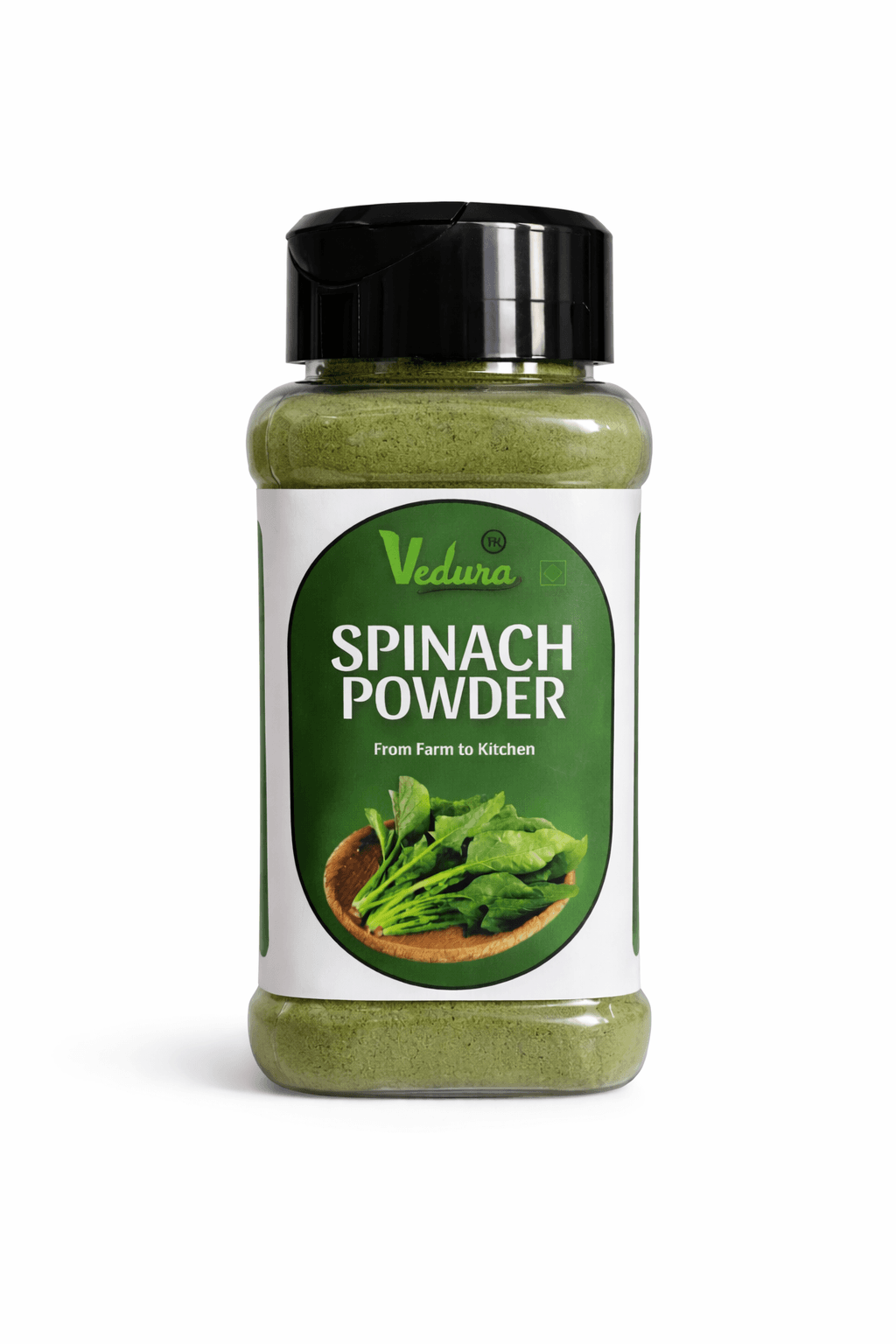
1. Spinach (Palak) Powder — The daily-use green. Best for iron and folate. Works in dals, parathas, smoothies, dosa batter, baby food. Mild, slightly sweet, not assertive.
2. Sarso Ka Saag Powder — Winter green, year-round. Rehydrate and cook with ghee and makki ka atta for authentic Punjabi saag any month of the year. Peppery, bitter, traditional.
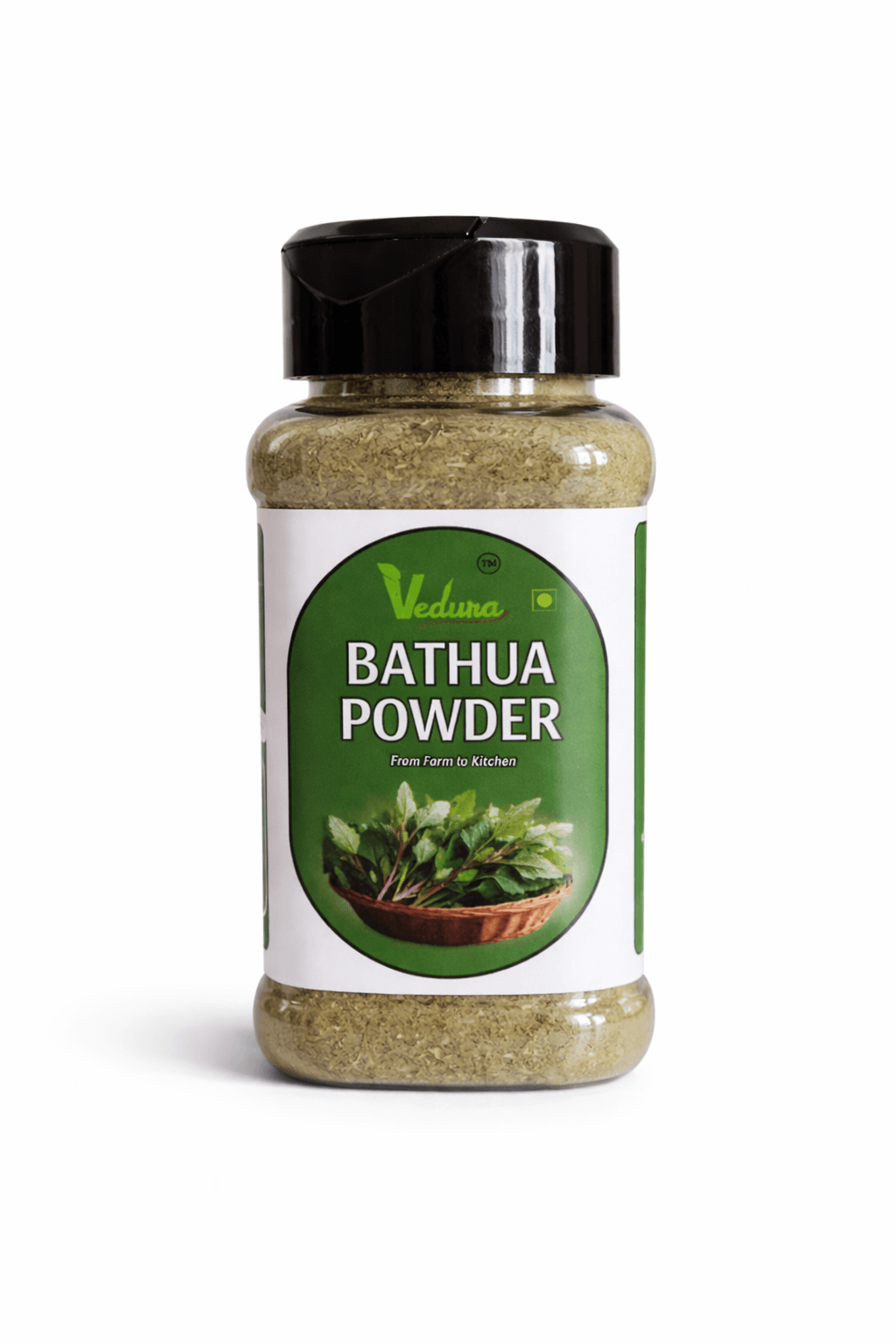
3. Bathua Powder — The Indian superfood almost nobody under 40 knows about. Rivals dairy for calcium density. Best in raita, parathas, and as a digestive-supporting addition to dals. Earthy, mineral, mildly tangy.
4. Moringa Powder — The most nutrient-dense of the four. Iron, calcium, vitamin C, vitamin A, plant protein. Mild, grassy, slightly earthy. Best in warm water with lemon, in smoothies, or stirred into dals.
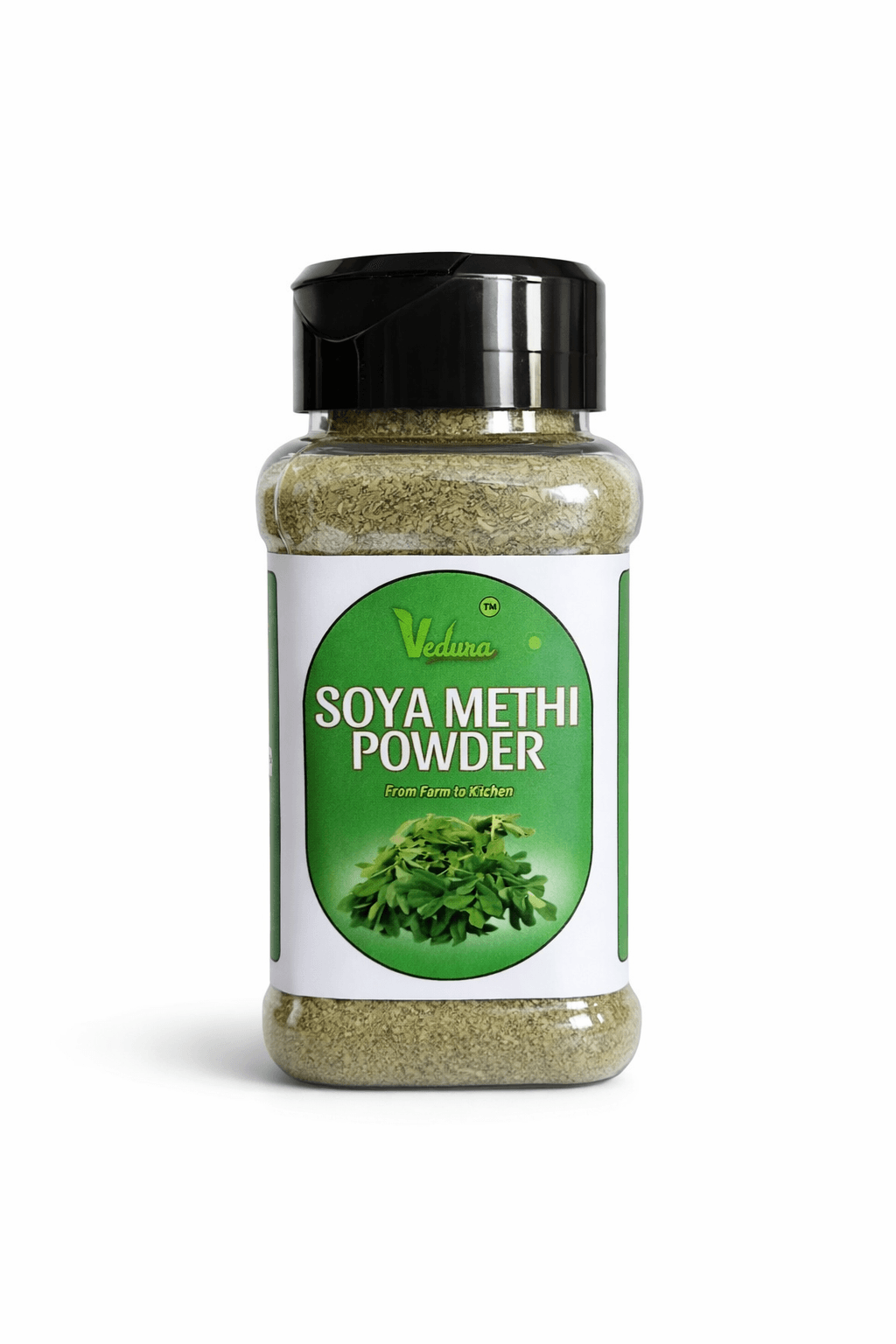
Additionally: Dehydrated Coriander Powder (leaf-based, not seed-based — completely different from regular dhania powder), Soya Methi Powder (fenugreek + soyabean plant protein), and Dehydrated Chane Ka Saag / Cauliflower for rotating seasonal profiles.
How to Cook With Dehydrated Greens
- Dals and soups: Stir 1–2 tsp into a simmering dal in the last 5 minutes. Avoid boiling for extended periods — it is unnecessary and dulls the colour.
- Parathas and rotis: Add 2 tsp per cup of atta while kneading. You get a green paratha with no chopping, washing or wilting.
- Raita: Stir ½–1 tsp into plain yoghurt with roasted cumin and a pinch of salt.
- Smoothies: 1 tsp of spinach or moringa powder with a banana, water, ginger, lemon. Blends smooth.
- Baby food: ⅛ to ¼ tsp stirred into puree from around 8 months onwards (consult your paediatrician).
- Saag-style curries: 3–4 tbsp of sarso powder rehydrated in warm water for 5 minutes, then cooked traditionally with ghee, ginger, and makki atta.
One important rule: always use a dry spoon. Dehydrated greens are hygroscopic — moisture ruins the powder. Reseal the pouch within seconds of opening.
Are Dehydrated Greens "Processed Food"?
Technically yes, in the sense that they are processed (dried and ground). Functionally no, in the sense that nothing is added and nothing is chemically altered. A minimally processed, single-ingredient dehydrated green sits at the opposite end of the processing spectrum from ultra-processed ready meals. The FDA's NOVA classification would put a pure dehydrated leaf powder in Category 1 (unprocessed or minimally processed), not Category 4 (ultra-processed).
Read the label. If the ingredient list is "spinach" or "moringa" — that is one ingredient. If it is a paragraph long with maltodextrin, flow agents, or artificial colour — that is a processed food product, not a dehydrated green.
Where to Buy Quality Dehydrated Greens in India
Vedura Foods produces single-ingredient, farm-gate-dehydrated green powders from:
- Dehydrated Spinach Powder
- Dehydrated Sarso Ka Saag Powder
- Dehydrated Bathua Powder
- Dehydrated Soya Methi Powder
- Dehydrated Coriander Powder
- Moringa Powder
Every pack is FSSAI-licensed, single-ingredient, free of fillers and anti-caking agents, and available on both the Vedura shop and the Vedura Amazon store.
FAQ
Q: Do dehydrated greens lose nutrients compared to fresh?
A: Gram-for-gram, properly dehydrated greens retain most of their vitamins and minerals. Because water is removed, per-gram nutrient density is actually much higher than fresh. Vitamin C degrades somewhat, but iron, calcium, folate and protein are well-preserved.
Q: Are they organic?
A: Vedura sources from small-farmer partners under a fair-trade model. Certification status varies by batch — check the label for specifics.
Q: Can I replace fresh greens with powder 1:1?
A: No — the ratio is roughly 1 tsp of powder (≈3g) to 1 cup of fresh leaves (≈30g). Use less than you think.
Q: How long do they last?
A: 12 months from packaging when stored cool, dark, and dry. Always reseal and use a dry spoon.
Q: Are they suitable during pregnancy?
A: Leafy greens are generally recommended during pregnancy for their folate and iron content. However, consult your doctor before increasing any single food significantly during pregnancy.
Dehydrated greens are not a gimmick or a wellness trend. They are a practical fix for a structural problem in India's fresh produce supply chain — and a way to get the nutritional benefit of traditional leafy vegetables 365 days a year instead of 60.
Explore topics
Continue your Vedura journey
Explore product pages, practical recipes, and research-led explainers connected to this topic.
Comments
Be the first to comment.