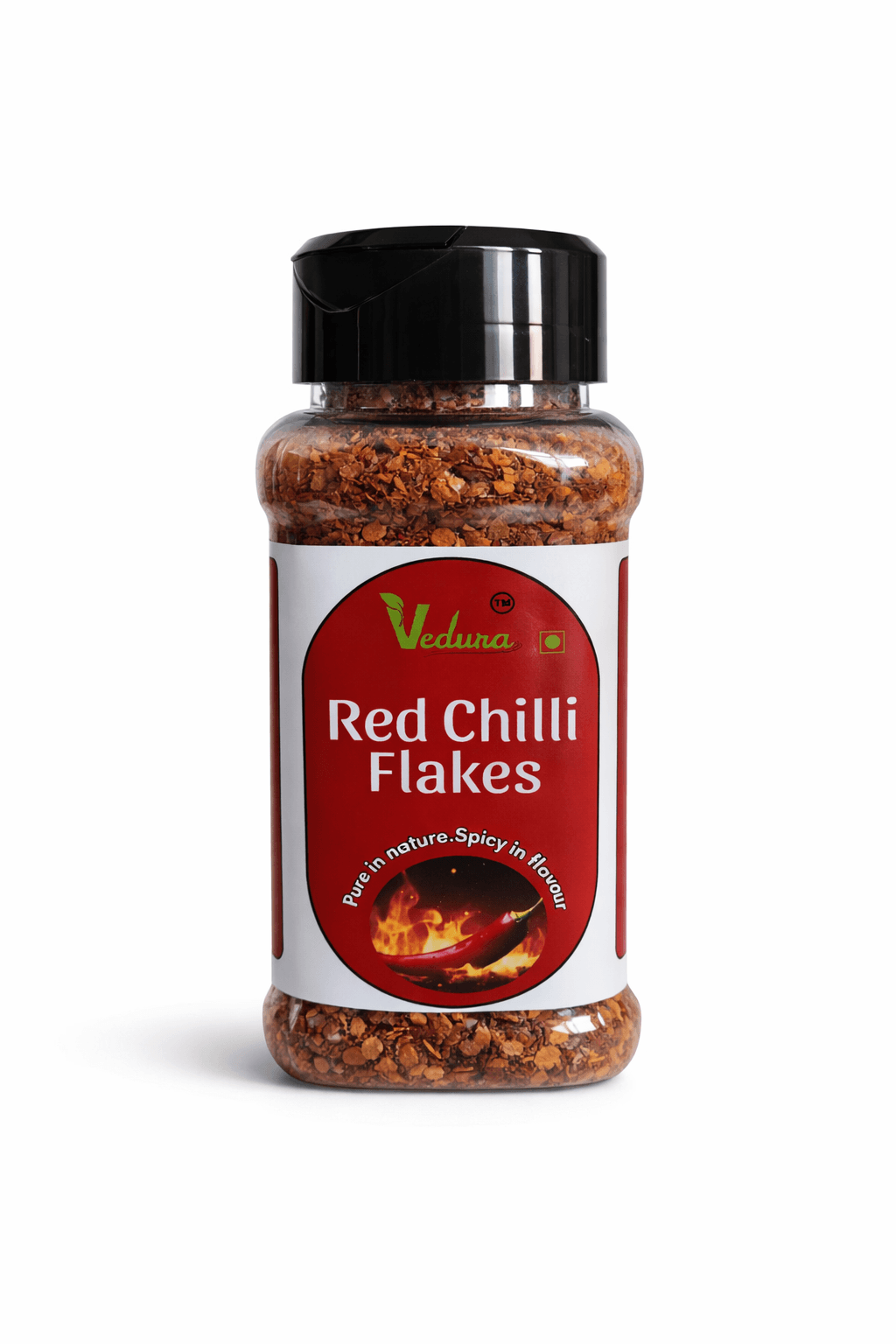
For a truly authentic and flavourful experience, consider Vedura's natural [red chilli flakes](https://www.vedurafoods.com/product/red-chilli-flakes), carefully sourced and processed to retain their potent heat and vibrant colour.
| Feature | Red Chilli Flakes | Green Chilli Flakes | |----------------|-------------------------------------------------|---------------------------------------------------| | **Source** | Dried, ripe red chillies | Dried, unripe green chillies | | **Heat Profile** | Deeper, lingering, robust heat | Sharper, more immediate, pungent heat | | **Flavour** | Smoky, earthy, slightly fruity | Fresh, herbaceous, grassy, zesty | | **Colour** | Vibrant red, adds strong visual colour | Subtle green to yellowish-green, less colour impact | | **Aroma** | Rich, warm, sometimes smoky | Fresh, sharp, piquant | | **Best Uses** | Curries, pizzas, pasta, tadka, rich gravies | Chaat, raitas, salads, fresh marinades, light dishes |
Quick Summary
Red chilli flakes and green chilli flakes offer distinct culinary experiences, differing primarily in their heat intensity, flavour profile, and visual appeal. Red flakes, typically made from dried mature chillies, provide a robust, often smoky heat and vibrant colour, while green flakes, from unripe chillies, deliver a fresher, sharper pungency and herbaceous notes. Understanding these differences is key to mastering their application in various dishes.
The Essence of Chilli Flakes in Indian Cuisine
Chilli flakes, or crushed red pepper as they are often known globally, are a staple condiment in kitchens worldwide, prized for their ability to instantly add a kick of heat and a burst of flavour. In India, where chillies are an integral part of nearly every regional cuisine, both red and green varieties are celebrated for their unique characteristics. While whole chillies are common, flakes offer a convenient way to introduce controlled heat and texture without the full intensity or chewiness of a whole pod.
Red Chilli Flakes: The Depth of Dried Heat
Red chilli flakes are typically made from mature, ripe red chillies that have been dried and then coarsely crushed. The drying process concentrates their flavour and develops a deeper, often smoky aroma. The heat in red chillies primarily comes from capsaicin, concentrated in the placenta and seeds, offering a lingering warmth that builds slowly.
Heat and Flavour Profile
Red chilli flakes usually offer a medium to high level of heat, depending on the variety of chilli used. Common Indian varieties like Byadagi or Guntur Sannam contribute to a palatable yet pronounced warmth. Beyond the heat, they impart a slightly fruity, sometimes smoky, and earthy flavour that complements rich, savoury dishes. The Spice Board of India highlights the significant role of dried red chillies in Indian culinary exports, underscoring their global appeal and diverse applications.
Colour and Best Uses
The vibrant red hue of these flakes adds an appealing visual element to dishes. They are perfect for:
* Pizza and Pasta: A classic topping for Italian-inspired dishes.
* Indian Curries and Sabzis: Adding a final punch to gravies and dry vegetable preparations.
* Tadka/Tempering: Infusing oils with their robust flavour and heat, as seen in dals and chutneys.
* Marinades: Giving a warm base to meat or paneer marinades.
For a truly authentic and flavourful experience, consider Vedura's natural red chilli flakes, carefully sourced and processed to retain their potent heat and vibrant colour.
Green Chilli Flakes: The Burst of Fresh Pungency
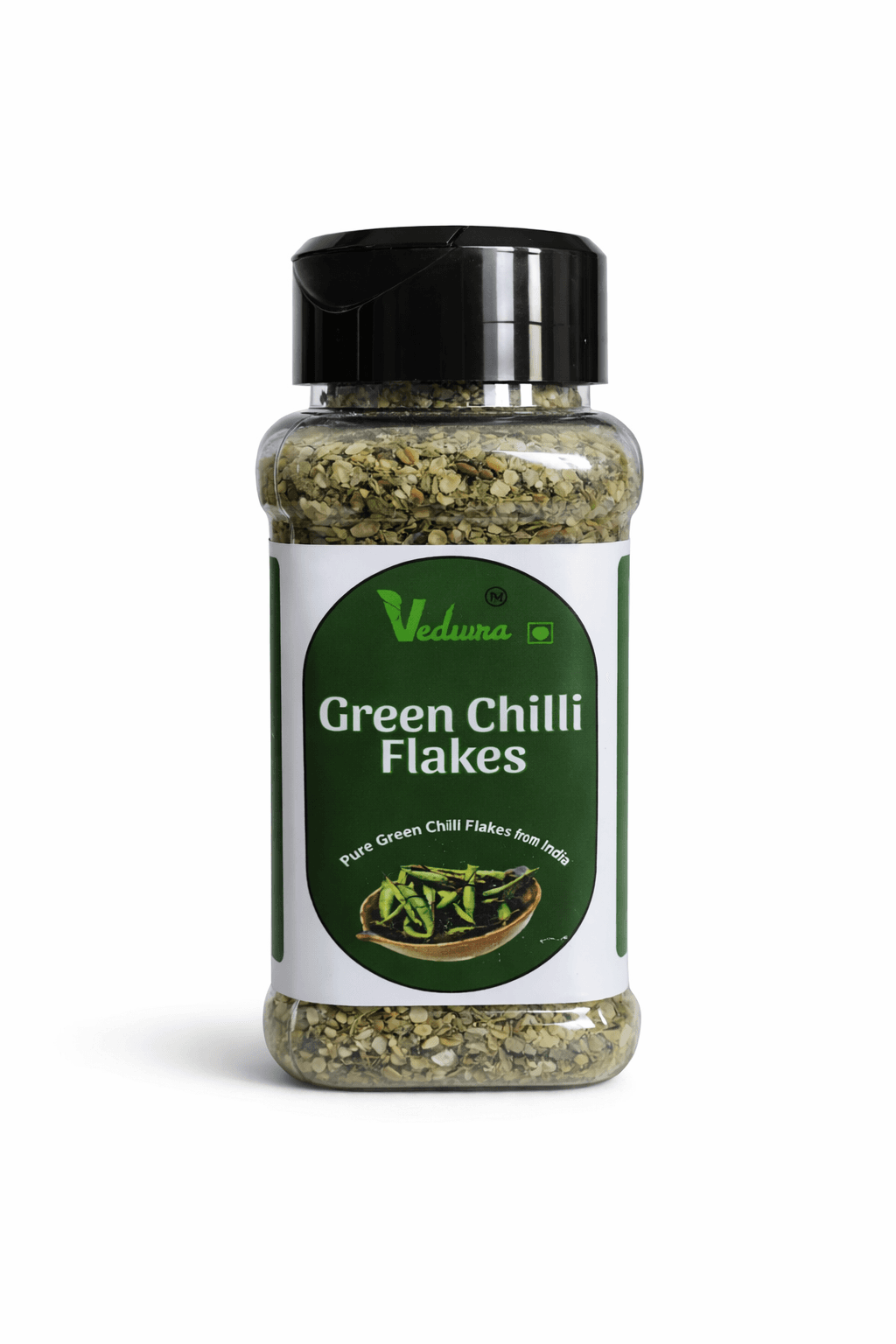
Green chilli flakes are derived from unripe green chillies, which are typically dehydrated and then crushed. Since they haven't undergone the full ripening process, their flavour profile is distinctly different from their red counterparts. The drying process for green chillies is often more nuanced to preserve their fresh characteristics.
Heat and Flavour Profile
The heat from green chilli flakes is often described as sharper, more immediate, and less lingering than red flakes. It carries a distinct raw, herbaceous, and pungent flavour that adds a fresh 'bite' to dishes. The capsaicin content can vary, but the overall sensation is one of bright, fresh heat rather than a deep warmth. According to ICMR-NIN (Indian Council of Medical Research - National Institute of Nutrition), green chillies are also a good source of Vitamin C, though this content is reduced during drying.
Colour and Best Uses
Green chilli flakes maintain a subtle green to yellowish-green tint, which can be desirable for dishes where a red colour is not desired or a fresh aesthetic is preferred. They are excellent for:
* Chaat and Snacks: Adding a zesty, sharp kick to street food favourites like aloo tikki or bhel puri.
* Raitas and Dips: Contributing a fresh, piquant flavour without overpowering other ingredients.
* Salads and Fresh Preparations: Enhancing the natural flavours of fresh vegetables.
* Marinades (for lighter dishes): Providing a crisp heat to chicken, fish, or vegetable marinades.
Red vs. Green Chilli Flakes: A Comparative Overview
| Feature | Red Chilli Flakes | Green Chilli Flakes |
|----------------|-------------------------------------------------|---------------------------------------------------|
| Source | Dried, ripe red chillies | Dried, unripe green chillies |
| Heat Profile | Deeper, lingering, robust heat | Sharper, more immediate, pungent heat |
| Flavour | Smoky, earthy, slightly fruity | Fresh, herbaceous, grassy, zesty |
| Colour | Vibrant red, adds strong visual colour | Subtle green to yellowish-green, less colour impact |
| Aroma | Rich, warm, sometimes smoky | Fresh, sharp, piquant |
| Best Uses | Curries, pizzas, pasta, tadka, rich gravies | Chaat, raitas, salads, fresh marinades, light dishes |
Choosing the Right Flake for Your Dish
The choice between red and green chilli flakes hinges on the desired flavour, heat, and visual outcome for your dish. If you're aiming for a deep, warm, and visually striking dish with a lingering heat, red chilli flakes are your go-to. They blend seamlessly into rich sauces and oil-based preparations, imparting their characteristic depth.
Conversely, if your goal is a fresh, sharp, and immediate burst of heat with herbaceous undertones, without significantly altering the colour, green chilli flakes are ideal. They shine in fresh preparations, salads, and lighter dishes where their pungent freshness can truly elevate the overall profile. Experimentation is always encouraged to discover how each type interacts with your favourite ingredients and recipes.
FAQs
Q: Are red and green chilli flakes from different plants?
A: No, typically both red and green chilli flakes come from the same chilli plant species (Capsicum annuum). The difference lies in their maturity; green flakes are made from unripe chillies, while red flakes are made from fully ripened chillies that have changed colour and developed different flavour compounds.
Q: Can I substitute red for green chilli flakes?
A: While you can substitute them for heat, be aware that the flavour profile will change significantly. Red flakes will introduce a deeper, smokier, and warmer note, whereas green flakes offer a fresher, sharper, and more herbaceous taste. Choose based on whether the flavour change aligns with your dish's intended outcome.
Q: Which is hotter, red or green chilli flakes?
A: The heat level depends more on the specific chilli variety than its colour. However, generally, fully ripened red chillies tend to have a higher concentration of capsaicin and a more enduring heat sensation. Green chillies often provide a sharper, more immediate, but sometimes less lingering heat.
Q: How do I store chilli flakes to retain freshness?
A: To maintain their potency and flavour, store chilli flakes in an airtight container in a cool, dark place, away from direct sunlight and moisture. Refrigeration can further extend their shelf life, especially in humid climates, preventing loss of flavour and heat.
Q: What is the Scoville scale?
A: The Scoville Organoleptic Test, developed by American pharmacist Wilbur Scoville in 1912, is a measurement of the pungency (spicy heat) of chilli peppers and other spicy foods. It measures the concentration of capsaicin, the chemical compound responsible for the heat, expressed in Scoville Heat Units (SHU).
Q: Are there any health benefits to consuming chilli flakes?
A: Yes, chillies contain capsaicin, which is known for its anti-inflammatory and antioxidant properties. They can also aid in metabolism and pain relief. However, consumption should be in moderation, as excessive intake can lead to digestive discomfort for some individuals.
Explore topics
Continue your Vedura journey
Explore product pages, practical recipes, and research-led explainers connected to this topic.
Comments
Be the first to comment.