* **Eggs:** Whether you're making scrambled eggs, an omelette, or even just seasoning boiled eggs, a sprinkle of turmeric salt adds a beautiful golden hue and a subtle, earthy flavour. It elevates a simple breakfast into something more vibrant and nutritious. Try it in your next anda bhurji for an instant upgrade. * **Salads:** Move beyond plain salt and pepper. Turmeric salt can be a game-changer for salads. Use it in your vinaigrette or sprinkle it directly over chopped cucumbers, tomatoes, and onions for a refreshing Indian-style salad. The warmth of turmeric complements fresh vegetables beautifully. * **Roasted Vegetables:** Potatoes, cauliflower (gobhi), broccoli, carrots – almost any roasted vegetable benefits from turmeric salt. It helps create a gorgeous golden crust and imparts a nuanced flavour that pairs wonderfully with the caramelisation of roasting. Toss your vegetables with a little oil and turmeric salt before baking. * **Dals & Soups:** While turmeric is a staple in most dals, using turmeric salt as a finishing seasoning or even in the initial stages can deepen the flavour profile. For creamy soups, it adds an inviting colour and a gentle warmth, making them more comforting and appealing. It’s particularly good in a simple moong dal or a vegetable clear soup. * **Snacks & Appetizers:** Think beyond the main course. A light dusting of turmeric salt can enhance roasted nuts, homemade vegetable chips, or even popcorn. It’s also fantastic on cut fruit like pineapple or guava, adding a tangy-savoury kick reminiscent of street-side chaat. * **Marinades:** For paneer, chicken, or fish, turmeric salt can be an integral part of your marinade. It contributes colour, acts as a natural tenderiser, and infuses the protein with its distinct health properties, preparing it for grilling or frying.
This is where the magic of black pepper, or more specifically, piperine, comes into play. Piperine is the primary active compound in black pepper and has been scientifically shown to significantly enhance the absorption of curcumin. According to research cited by institutions like the Indian Council of Medical Research - National Institute of Nutrition (ICMR-NIN) in Hyderabad, combining turmeric with black pepper can increase curcumin's bioavailability by up to 2,000%. This synergy is why many turmeric-based products, including high-quality turmeric salt, often incorporate a hint of black pepper.
Quick Summary
Turmeric salt is a simple, yet potent, ingredient that effortlessly combines the earthy warmth of turmeric with the fundamental seasoning of salt. It's an excellent way to infuse both distinct flavour and significant health benefits into your daily meals. From eggs and salads to roasted vegetables and dals, it not only enhances taste but also boosts nutrient absorption, making it a valuable addition to any Indian kitchen.
Elevating Everyday Dishes with Turmeric Salt
Gone are the days when turmeric was relegated solely to curries and traditional Indian gravies. Turmeric salt makes it incredibly easy to incorporate this 'golden spice' into a much wider array of dishes, transforming everyday meals into flavourful and healthier experiences. It’s about conscious seasoning, where every pinch adds both taste and wellness.
The Versatility of Haldi Namak: Beyond Basic Seasoning
* Eggs: Whether you're making scrambled eggs, an omelette, or even just seasoning boiled eggs, a sprinkle of turmeric salt adds a beautiful golden hue and a subtle, earthy flavour. It elevates a simple breakfast into something more vibrant and nutritious. Try it in your next anda bhurji for an instant upgrade.
* Salads: Move beyond plain salt and pepper. Turmeric salt can be a game-changer for salads. Use it in your vinaigrette or sprinkle it directly over chopped cucumbers, tomatoes, and onions for a refreshing Indian-style salad. The warmth of turmeric complements fresh vegetables beautifully.
* Roasted Vegetables: Potatoes, cauliflower (gobhi), broccoli, carrots – almost any roasted vegetable benefits from turmeric salt. It helps create a gorgeous golden crust and imparts a nuanced flavour that pairs wonderfully with the caramelisation of roasting. Toss your vegetables with a little oil and turmeric salt before baking.
* Dals & Soups: While turmeric is a staple in most dals, using turmeric salt as a finishing seasoning or even in the initial stages can deepen the flavour profile. For creamy soups, it adds an inviting colour and a gentle warmth, making them more comforting and appealing. It’s particularly good in a simple moong dal or a vegetable clear soup.
* Snacks & Appetizers: Think beyond the main course. A light dusting of turmeric salt can enhance roasted nuts, homemade vegetable chips, or even popcorn. It’s also fantastic on cut fruit like pineapple or guava, adding a tangy-savoury kick reminiscent of street-side chaat.
* Marinades: For paneer, chicken, or fish, turmeric salt can be an integral part of your marinade. It contributes colour, acts as a natural tenderiser, and infuses the protein with its distinct health properties, preparing it for grilling or frying.
The Science Behind the Spice: Curcumin and Piperine
Turmeric's fame largely stems from its active compound, curcumin. Curcumin is a powerful antioxidant and anti-inflammatory agent, known for a wide range of potential health benefits, from supporting joint health to boosting immunity. However, curcumin's bioavailability – how well the body absorbs and utilises it – is notoriously low on its own.
This is where the magic of black pepper, or more specifically, piperine, comes into play. Piperine is the primary active compound in black pepper and has been scientifically shown to significantly enhance the absorption of curcumin. According to research cited by institutions like the Indian Council of Medical Research - National Institute of Nutrition (ICMR-NIN) in Hyderabad, combining turmeric with black pepper can increase curcumin's bioavailability by up to 2,000%. This synergy is why many turmeric-based products, including high-quality turmeric salt, often incorporate a hint of black pepper.
By choosing a turmeric salt that includes a touch of black pepper, you're not just adding flavour; you're optimising your body's ability to absorb and benefit from curcumin, making it a truly smart choice for your kitchen.
Practical Tips for Daily Use
Incorporating turmeric salt into your daily cooking routine is simple. Here are a few tips to get you started:
* Taste as you Go: Like any seasoning, start with a small amount and adjust to your taste preferences. Turmeric has a distinct flavour that can be overpowering if used in excess.
* Replace Regular Salt: For many dishes, especially those where a golden hue is desirable (like eggs or roasted vegetables), turmeric salt can directly replace your regular table salt.
* Finishing Salt: Use it as a finishing salt just before serving to add a fresh burst of flavour and colour to dishes like dals, soups, or even simple rice preparations.
* Storage: Store turmeric salt in an airtight container in a cool, dry place, away from direct sunlight, to preserve its potency and prevent clumping.
Here’s a quick guide to help you decide when to reach for turmeric salt versus plain salt:
| Dish Type | Plain Salt Use | Turmeric Salt Use |
| :----------------- | :------------------------------------------- | :----------------------------------------------------- |
| Eggs (Scrambled) | Basic seasoning for taste | Adds earthy warmth, golden hue, and health benefits |
| Roasted Vegetables | Enhances natural flavours | Imparts a vibrant colour and subtle peppery-earthy note |
| Dals & Soups | Essential for balancing flavours | Deepens flavour profile, adds a healthy golden tint |
| Salads | Simple seasoning | Elevates flavour, offers an antioxidant boost |
| Marinades | Core ingredient for tenderising and flavour | Infuses colour, distinct aroma, and health properties |
Vedura Turmeric Salt: A Conscious Choice for Your Kitchen
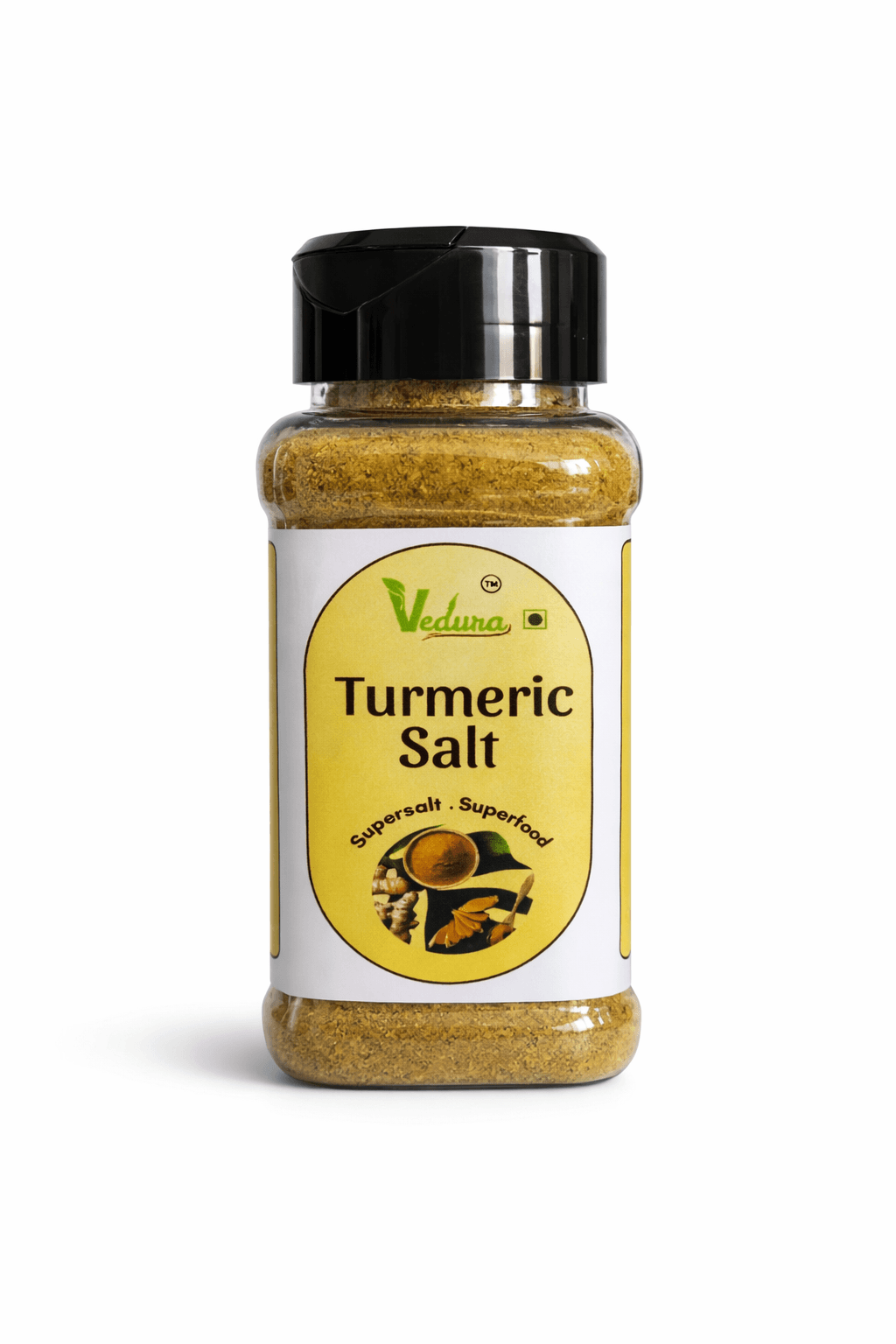
At Vedura Foods, our Turmeric Salt is crafted to bring this precise balance of flavour and health benefits to your kitchen. Made from natural ingredients, it’s a convenient way to incorporate the goodness of turmeric into your daily meals. We ensure our products meet stringent quality benchmarks, adhering to standards set by bodies like the Food Safety and Standards Authority of India (FSSAI), to bring you the best. Explore it further at https://www.vedurafoods.com/product/turmeric-salt.
FAQs
Q: What is turmeric salt?
A: Turmeric salt is a culinary blend of salt and ground turmeric, often with a hint of black pepper. It's designed to offer the convenience of seasoning with salt while simultaneously infusing dishes with the distinctive flavour, colour, and health benefits of turmeric, enhanced by pepper for better absorption.
Q: Is turmeric salt healthier than regular salt?
A: While turmeric salt still contains sodium, similar to regular salt, it offers added health benefits from the turmeric and often piperine (from black pepper). The curcumin in turmeric is known for its anti-inflammatory and antioxidant properties, making turmeric salt a more beneficial seasoning option compared to plain salt alone.
Q: Can I use turmeric salt in all my recipes?
A: Turmeric salt is incredibly versatile, but its earthy flavour and golden colour are best suited for dishes where these characteristics are welcome. It works wonderfully in Indian cuisine, with eggs, roasted vegetables, dals, and marinades. For dishes where a neutral colour or flavour is paramount, like certain delicate desserts or specific baking recipes, plain salt might be a more appropriate choice.
Q: How much turmeric salt should I use?
A: Start with an amount similar to how you would use regular salt, but always taste and adjust. Turmeric has a strong flavour, and while salt balances it, too much can be overpowering. A general rule of thumb is to use it as a 1:1 replacement for plain salt in recipes where turmeric flavour is desired, then fine-tune to your palate.
Q: Does turmeric salt stain food?
A: Yes, turmeric is known for its strong colouring properties. Turmeric salt will impart a golden-yellow hue to your food, which is often desirable in many dishes like eggs or roasted vegetables. Be mindful of this when adding it to dishes where you prefer a different colour profile.
Q: Where can I buy good quality turmeric salt?
A: Good quality turmeric salt is available from reputable spice brands and natural food stores. You can also find it online from brands like Vedura Foods, which focus on natural ingredients and quality sourcing. Always look for products with clear ingredient lists and good reviews to ensure you're getting a pure and beneficial blend.
Explore topics
Continue your Vedura journey
Explore product pages, practical recipes, and research-led explainers connected to this topic.
Comments
Be the first to comment.