India grows the large majority of the world's turmeric, and yet most of that crop is still sold as a raw commodity at the lowest point in the value chain. The gap between the farm-gate price of fresh turmeric and the shelf price of polished, ground, certified, and branded turmeric is exactly where the commercial opportunity sits. This guide covers what it takes to grow turmeric well - and, more importantly, how to capture more of the value it creates.
Turmeric is a tropical, long-duration crop, taking roughly 8-9 months from planting to harvest. It performs best with: - Warm, humid conditions in the 20-35°C range - Well-drained loamy or red soils rich in organic matter - Reliable moisture, from either assured irrigation or a dependable monsoon - A field rotation that avoids back-to-back turmeric on the same plot
Turmeric Farming in India: The Complete Commercial Guide for 2025
India grows the large majority of the world's turmeric, and yet most of that crop is still sold as a raw commodity at the lowest point in the value chain. The gap between the farm-gate price of fresh turmeric and the shelf price of polished, ground, certified, and branded turmeric is exactly where the commercial opportunity sits. This guide covers what it takes to grow turmeric well - and, more importantly, how to capture more of the value it creates.
Where Turmeric Grows Best
Turmeric is a tropical, long-duration crop, taking roughly 8-9 months from planting to harvest. It performs best with:
- Warm, humid conditions in the 20-35°C range
- Well-drained loamy or red soils rich in organic matter
- Reliable moisture, from either assured irrigation or a dependable monsoon
- A field rotation that avoids back-to-back turmeric on the same plot
Erode in Tamil Nadu and Wayanad in Kerala are the most recognised origins, but commercially viable turmeric is grown across Maharashtra, Telangana, Andhra Pradesh, Odisha, and the North East. Choice of variety matters more than most new growers realise - high-curcumin varieties command meaningful premiums from buyers who test for it.
Cultivation Basics That Affect Price
Three on-farm decisions shape your eventual pricing power:
1. Variety selection - curcumin content, finger size, and colour are graded by buyers. Pick a variety with proven demand in your target market.
2. Soil and organic matter - turmeric is a heavy feeder; soils built up with farmyard manure and green manure produce better rhizomes.
3. Post-harvest handling - boiling (curing), drying, and polishing are where most quality is won or lost. Poorly dried turmeric loses colour and develops mould risk, which collapses its price.
Raw, unprocessed turmeric sold straight off the field captures the least value of any pathway available to you.
The Value-Addition Ladder
Each step up this ladder adds margin:
- Cured and dried fingers - the baseline tradeable form
- Polished and graded fingers - cleaner appearance, sorted by size and colour
- Ground turmeric powder - milled, sieved, and packed
- Certified turmeric - organic or export-grade certification opens premium channels
- Branded retail turmeric - the highest-value form, sold direct to consumers
A grower who only sells fresh rhizomes leaves most of this margin to traders and processors. A grower - or a Farmer Producer Organisation - that processes and grades collectively keeps far more of it.
Government Support Worth Using
- PMFME offers a 35% credit-linked subsidy on eligible processing-unit costs for micro enterprises, which can fund polishing and grinding equipment.
- FPO formation support provides equity grants and collateral-free credit guarantees, making shared processing infrastructure viable at small scale.
- APEDA registration is the gateway to export markets, where certified Indian turmeric earns substantial premiums.
The full landscape is covered in our guide to government schemes for food-processing MSMEs.
The Most Profitable Pathway
The pattern that consistently delivers the best returns is: collective sourcing plus rigorous quality control plus on-site value addition plus a branded or contract sales channel. Selling a clean, certified, branded turmeric directly to food companies or consumers can return several times the raw-commodity price, while processing costs typically rise only modestly.
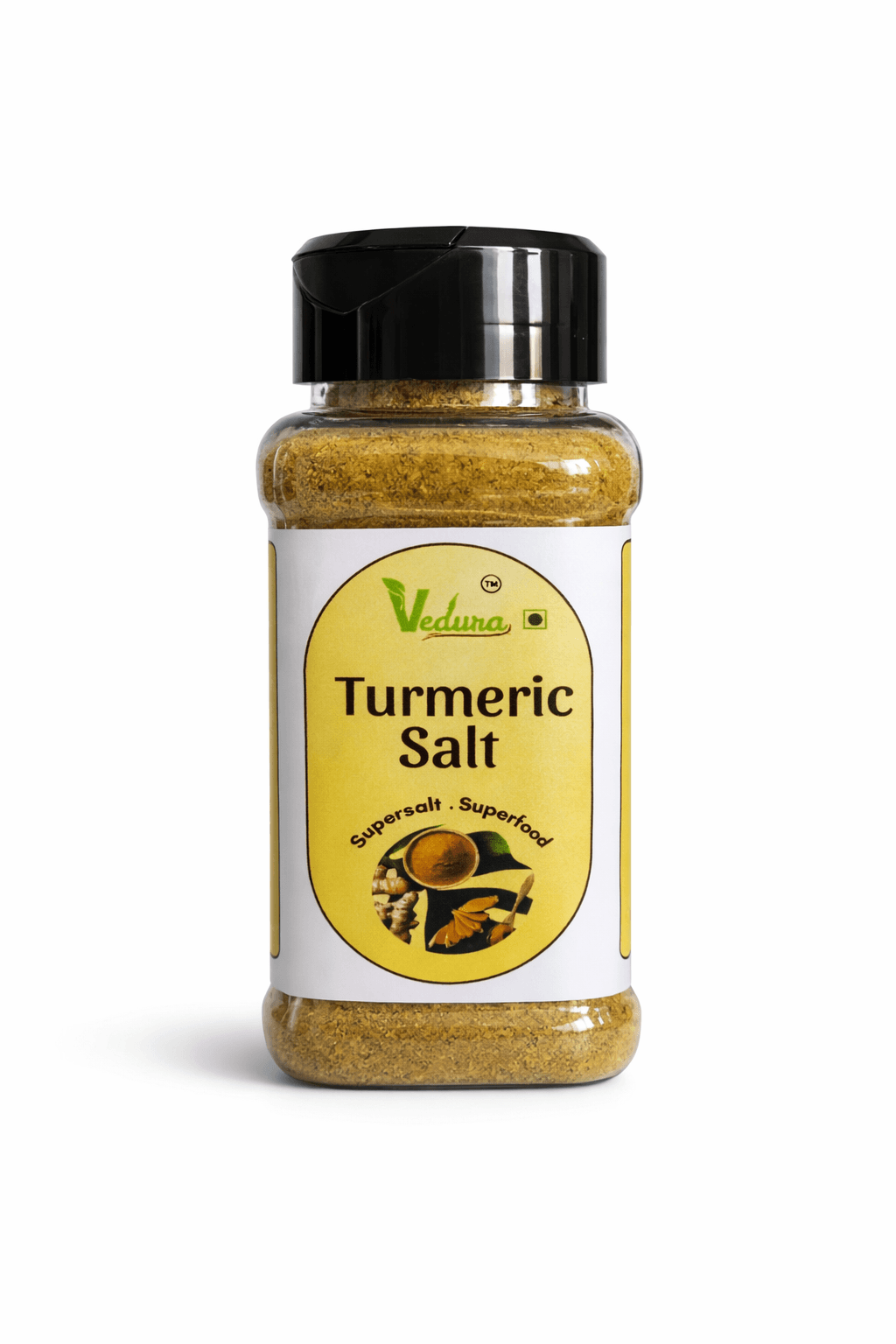
This is the same farm-to-shelf logic behind Vedura's own sourcing - for example our Turmeric Salt, built on quality turmeric rather than commodity bulk.
FAQs
What is the duration of a turmeric crop in India?
Most varieties take about 8-9 months from planting to harvest.
Where is the best turmeric grown in India?
Erode (Tamil Nadu) and Wayanad (Kerala) are the most famous origins, but commercial turmeric is grown across many states.
How can a turmeric farmer earn more per kilo?
By moving up the value-addition ladder - curing, polishing, grinding, certifying, and branding - rather than selling raw rhizomes at commodity prices.
Is there government support for turmeric processing?
Yes. PMFME provides processing subsidies for micro units, FPO schemes support shared infrastructure, and APEDA enables export-market access.
Explore topics
Continue your Vedura journey
Explore product pages, practical recipes, and research-led explainers connected to this topic.
Comments
Be the first to comment.