India is not one food culture. It is at least four - North, South, East, and West - each with a distinct spice philosophy shaped by different climates, different agricultural histories, and different trade relationships. The differences are not superficial variations on a common theme. They are fundamental divergences in how spice is understood, applied, and experienced.
Understanding these differences does not just make you a better cook. It makes you a more intelligent consumer of Indian food in all its regional expressions.
North vs South vs East vs West India: Four Spice Worlds in One Country
India is not one food culture. It is at least four - North, South, East, and West - each with a distinct spice philosophy shaped by different climates, different agricultural histories, and different trade relationships. The differences are not superficial variations on a common theme. They are fundamental divergences in how spice is understood, applied, and experienced.
Understanding these differences does not just make you a better cook. It makes you a more intelligent consumer of Indian food in all its regional expressions.
North India: The Warm, Aromatic Kitchen
Dominant spices: Cumin (jeera), coriander, turmeric, garam masala (a blend), black pepper, cardamom, dried red chilli, fenugreek (methi), hing (asafoetida), mustard seeds in some sub-regions.
The flavour philosophy: North Indian cooking is built around warmth and aromatic depth. The spice blends are layered - ground spices cooked into sauces and gravies, whole spices tempered in ghee or oil, finishing spices added at the end. The result is rich, deeply flavoured food where individual spices are often indistinguishable as separate elements in the finished dish.
Why this approach: The North Indian climate - cold winters, hot summers - created a preference for warming, heat-generating spices. Cumin, black pepper, and garam masala are all identified in Ayurvedic tradition as heat-producing (ushna virya) - foods that warm the body from within. The traditional North Indian diet evolved with the climate it was designed for.
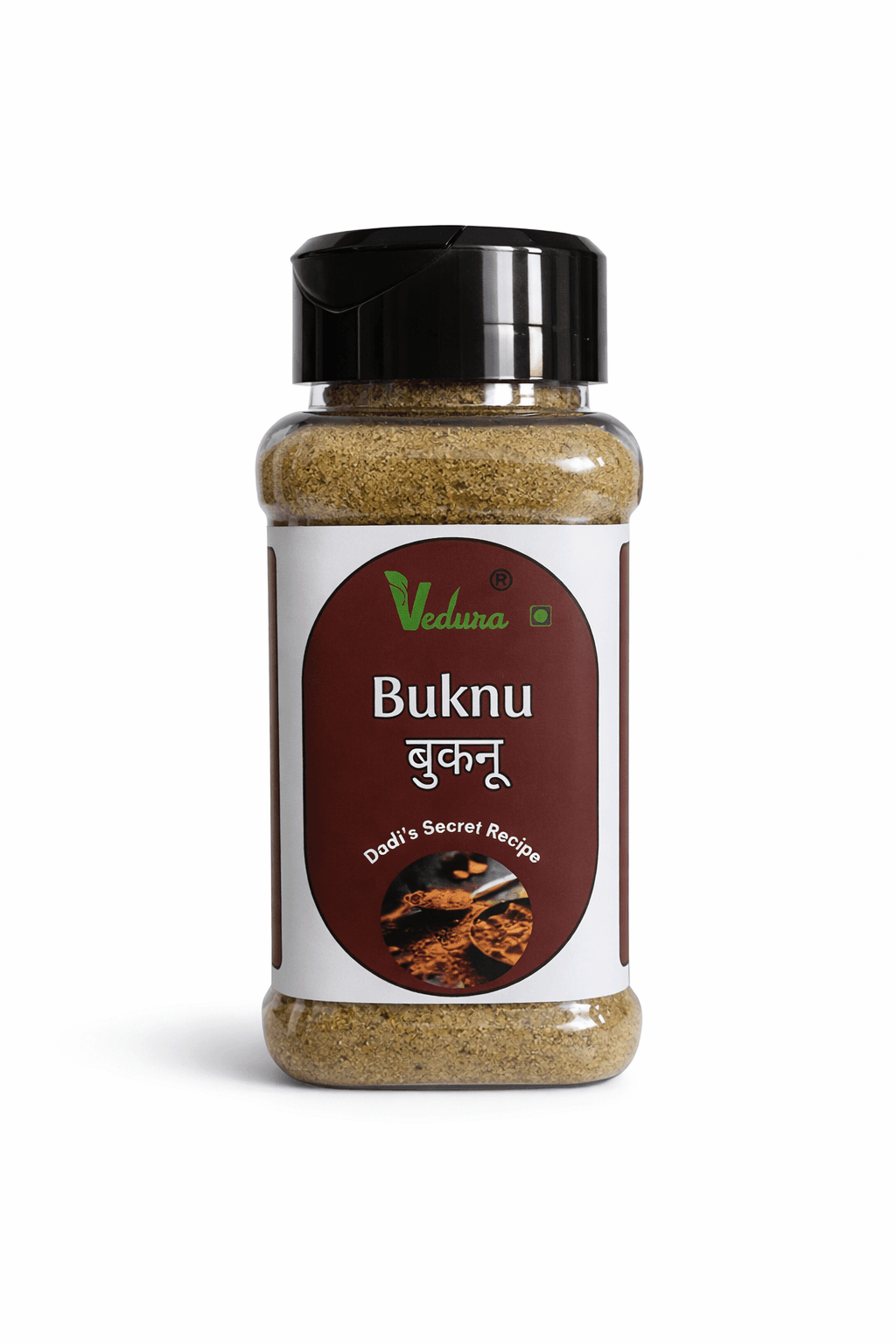
Signature regional expressions: Buknu in UP. Tandoori masala in Punjab. The distinct pickle spices of Rajasthan. Each represents a sub-regional elaboration of the North Indian spice tradition.
South India: The Sharp, Complex, Aromatic Kitchen
Dominant spices: Mustard seeds, curry leaves, black pepper, dried red chilli (Guntur variety), tamarind, coconut, asafoetida, urad dal used as a spice, sambar powder (a complex blend), rasam powder.
The flavour philosophy: South Indian cooking prioritises a different kind of complexity - sharp, sour, and intensely aromatic rather than warm and deep. Mustard seeds popped in oil with curry leaves is the defining opening movement of South Indian cooking - a quick, crackling explosion of aroma that North Indian tadka does not replicate. Tamarind provides sourness rather than the lime and yoghurt sourness of the North.
Why this approach: South India's tropical climate and abundant rainfall created access to black pepper, cardamom, and coconut as primary flavour bases long before trade routes brought northern spice culture southward. The Malabar Coast was the global source of black pepper for over two thousand years - South Indian cooking reflects that proximity to the world's most valuable medieval spice.
Signature expressions: Rasam - a thin, intensely spiced, peppery and tamarind-soured broth - is arguably the most distinctive South Indian spice preparation. Its flavour profile is impossible to achieve with North Indian spice logic.
East India (Bengal, Odisha, Northeast): The Panch Phoron Kitchen
Dominant spices: Panch phoron (a five-spice blend of mustard, fenugreek, nigella, fennel, and cumin seeds), mustard seed paste, turmeric, dried red chilli, hilsa-compatible spicing in Bengal, bamboo shoot preparations in the Northeast.
The flavour philosophy: East Indian cooking - particularly Bengali cooking - is built around contrast in a way that neither North nor South Indian cooking quite replicates. Sweet and savoury in the same dish (shorshe ilish uses mustard sharpness against the richness of fish). The panch phoron blend's five flavours - sweet fennel, bitter fenugreek, sharp mustard, earthy cumin, and aromatic nigella - create a complexity from a single tempering step that is uniquely Bengali.
Why this approach: Bengal's river delta geography created access to abundant fresh water, fish, and rice as dietary staples, and the spice tradition evolved to complement these primary ingredients. Mustard, grown widely in the Bengal delta, became the dominant spice medium rather than the ghee-based fat medium of the North.
Signature expressions: Panch phoron tadka in any preparation is immediately identifiable as Bengali. It is one of the most distinctive regional spice signatures in Indian cooking.
West India (Rajasthan, Gujarat, Maharashtra, Goa): The Contrasting Extreme Kitchen
Dominant spices: Region varies enormously - Gujarat favours mild, sweet-spiced cooking with sugar in savoury preparations; Rajasthan uses very dry, very hot chilli-forward spices to compensate for limited fresh vegetable access; Maharashtra uses goda masala (a complex, slightly sweeter blend); Goa uses vinegar-marinated, Portuguese-influenced spice profiles unlike anything else in India.
The flavour philosophy: The West has the widest internal diversity of any Indian food region. What unifies it is a willingness to use spice to solve specific environmental problems - Rajasthan's dry heat creates very hot, very dry spice profiles because fresh ingredients are scarce; Goa's Portuguese colonial history created a vinegar and chilli tradition that has no parallel elsewhere in India.
The Unifying Thread
Across all four regions, spice serves the same fundamental purposes: flavour, preservation, digestion, and health management. The ingredients differ. The techniques differ. The flavour outcomes differ radically.
But the intelligence that applies spice with intention - and the tradition of building a kitchen around that intelligence - is shared across every corner of the subcontinent.
That is the Indian food culture. Not one thing. Everything.
Explore topics
Continue your Vedura journey
Explore product pages, practical recipes, and research-led explainers connected to this topic.
Comments
Be the first to comment.