
The global superfood market is a masterpiece of marketing. It takes ingredients that are genuinely nutritious, assigns them exotic provenance or celebrity endorsement, and sells them at prices that are often 5-15 times higher than nutritionally equivalent local alternatives.
In India, this dynamic has produced a peculiar situation: a generation of health-conscious consumers spending premium rupees on imported superfoods while the domestically grown equivalents - often nutritionally superior, always dramatically cheaper - are sitting in their local kirana store or growing wild in nearby fields.
Chia Seeds vs Sabja. Kale vs Sarso. The Honest Comparison.
The global superfood market is a masterpiece of marketing. It takes ingredients that are genuinely nutritious, assigns them exotic provenance or celebrity endorsement, and sells them at prices that are often 5-15 times higher than nutritionally equivalent local alternatives.
In India, this dynamic has produced a peculiar situation: a generation of health-conscious consumers spending premium rupees on imported superfoods while the domestically grown equivalents - often nutritionally superior, always dramatically cheaper - are sitting in their local kirana store or growing wild in nearby fields.
Here is the comparison the marketing does not want you to make.
Chia Seeds (Rs 800-1,200/kg) vs Sabja Seeds (Rs 100-150/kg)
Chia seeds are the defining superfood of the 2010s. Omega-3 fatty acids, soluble fibre, protein. Marketed aggressively in India as a weight management and gut health aid. Imported primarily from Mexico and South America.
Sabja seeds (basil seeds / tukmaria) are native to South Asia, have been used in Indian drinks and desserts for centuries (falooda, sharbat), and have a nutritional profile that is strikingly similar to chia in almost every measured category - including soluble fibre content, which is the primary functional property driving chia's popularity.
The comparison per 100g:
- Fibre: Chia 34g vs Sabja 22g (chia ahead, but sabja at one-eighth the cost)
- Omega-3: Chia 17g vs Sabja 2.5g (chia clearly ahead here)
- Calcium: Chia 631mg vs Sabja 208mg
- Price per serving: Chia Rs 40-60 vs Sabja Rs 5-8
Verdict: For fibre and omega-3, chia has a genuine advantage. For calcium and price, sabja wins. For everyday use in Indian food contexts - where the seeds are hydrated and used as a texture element - sabja is functionally equivalent at a fraction of the cost. Buy both if you can afford it. Buy sabja if you cannot.
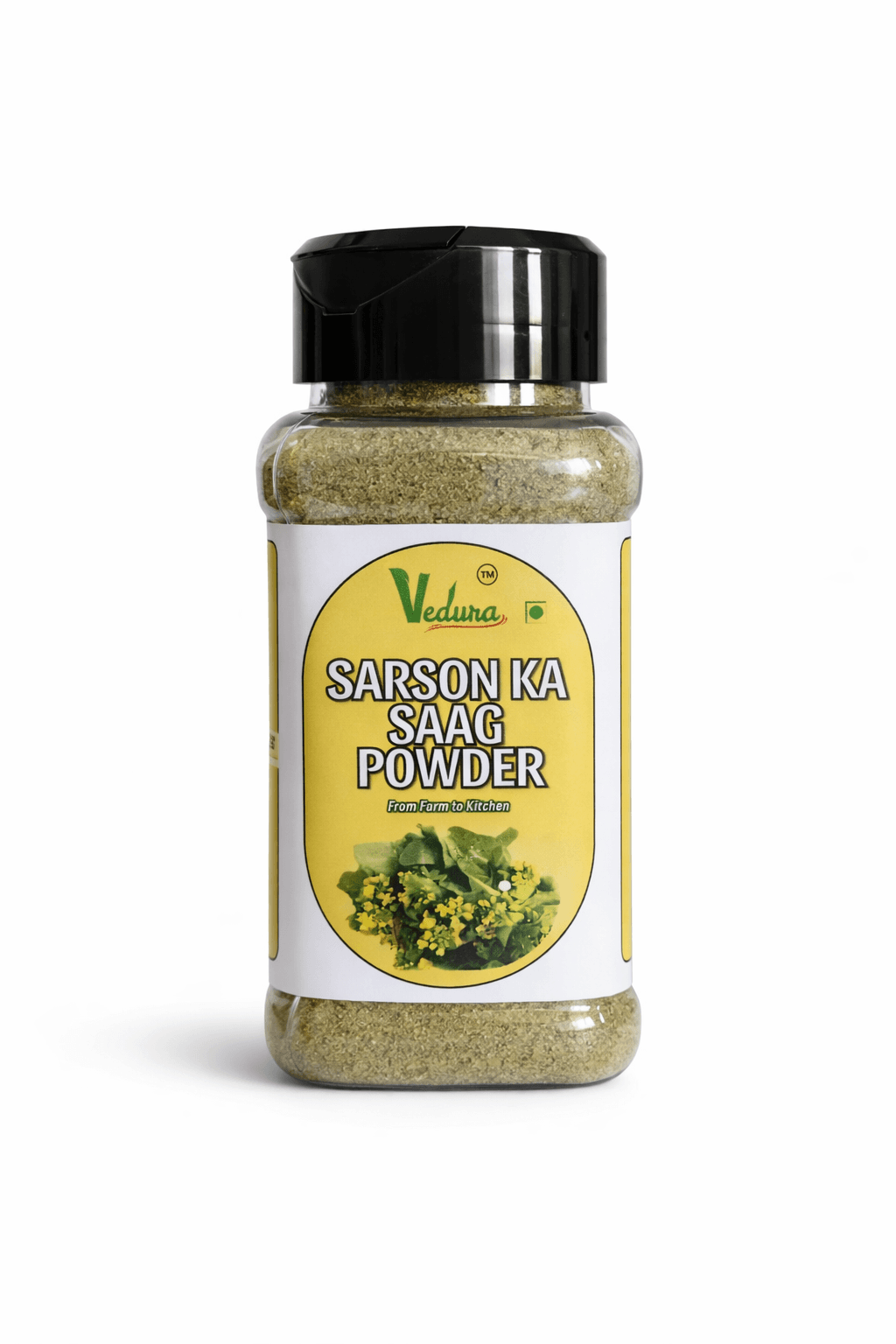
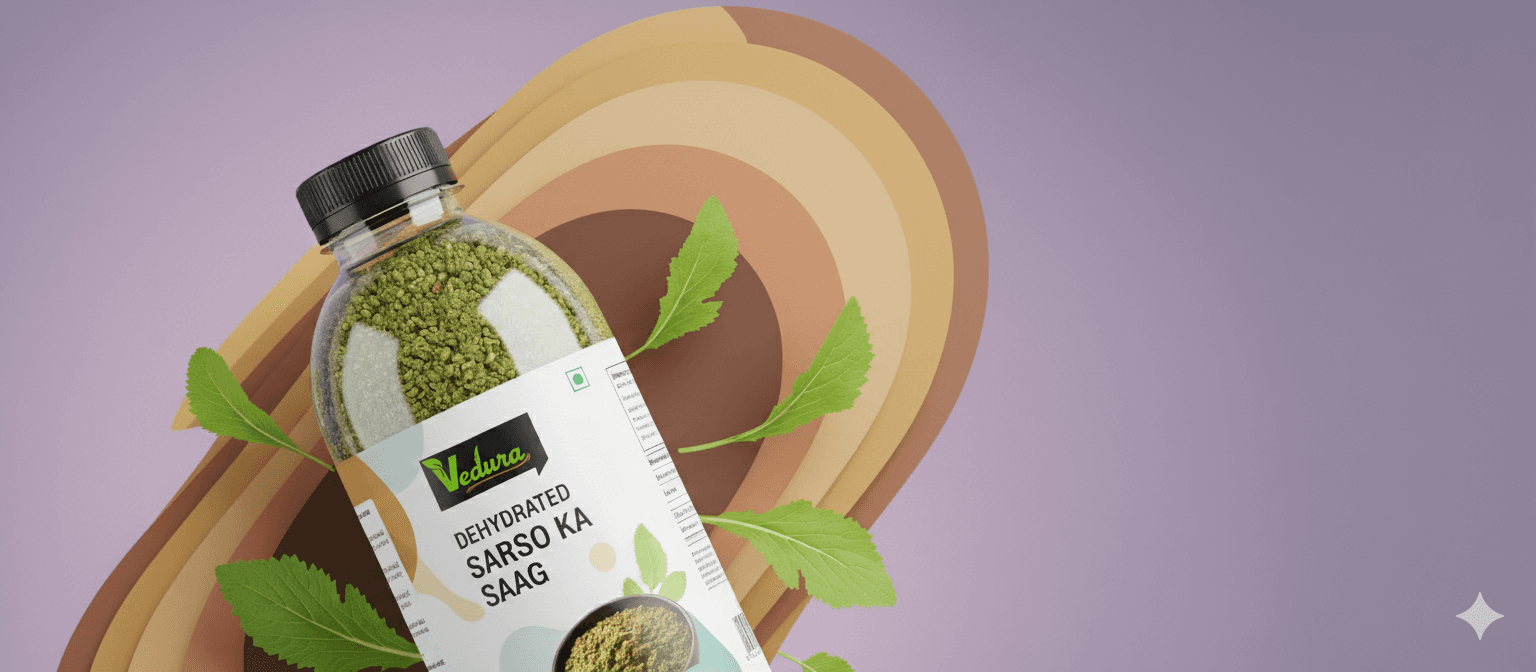
Kale (Rs 400-600/bunch) vs Sarso Ka Saag Powder (Rs 200-250/50g)
Kale is the most aggressively marketed leafy green in global wellness culture. It entered Indian premium supermarkets and restaurant menus around 2015 and has remained a premium-priced "health vegetable" despite being a temperate-climate crop with no historical presence in Indian food.
Sarso (mustard greens) is the indigenous equivalent - a winter leafy green from the same Brassica family as kale, with a comparable nutritional profile and a several-thousand-year presence in Indian culinary tradition.
Comparison per 100g fresh weight:
- Vitamin K: Kale 817mcg vs Sarso 257mcg (kale significantly ahead)
- Vitamin C: Kale 120mg vs Sarso 70mg (kale ahead)
- Vitamin A: Kale 500mcg vs Sarso 151mcg (kale ahead)
- Calcium: Kale 150mg vs Sarso 115mg (roughly comparable)
- Glucosinolates (cancer-protective compounds): Both are excellent sources - same Brassica family
Verdict: Kale has a genuine nutritional edge over fresh sarso in most vitamins. However, dehydrated sarso powder - more concentrated by weight than fresh - narrows this gap significantly. And the cultural fit of sarso in Indian cooking is perfect while kale in dal or paratha is an awkward import. Price per nutritional serving: sarso powder wins by a factor of 5-8x.
Quinoa (Rs 300-500/kg) vs Rajma + Rice Combination (Rs 80-120/kg combined)
Quinoa is celebrated as a complete protein - containing all nine essential amino acids. This is real and valuable. It is also available from South American crops at a significant price premium in India.
Rajma (kidney beans) + rice eaten together provides a complete amino acid profile through complementary proteins - lysine-rich legume combined with methionine-rich grain. This combination achieves the same nutritional outcome as quinoa's complete protein through combination rather than single-source completeness.
Per 100g cooked, protein content:
- Quinoa: 4.4g (complete)
- Rajma: 8.7g (incomplete alone)
- Rice + Rajma combination: 5-7g (complete)
Verdict: The complete protein argument for quinoa is valid but overstated as a reason to pay the premium in an Indian dietary context where dal-chawal combinations already provide complete protein coverage. Rajma-chawal is nutritionally equivalent at 15-20% of the cost.
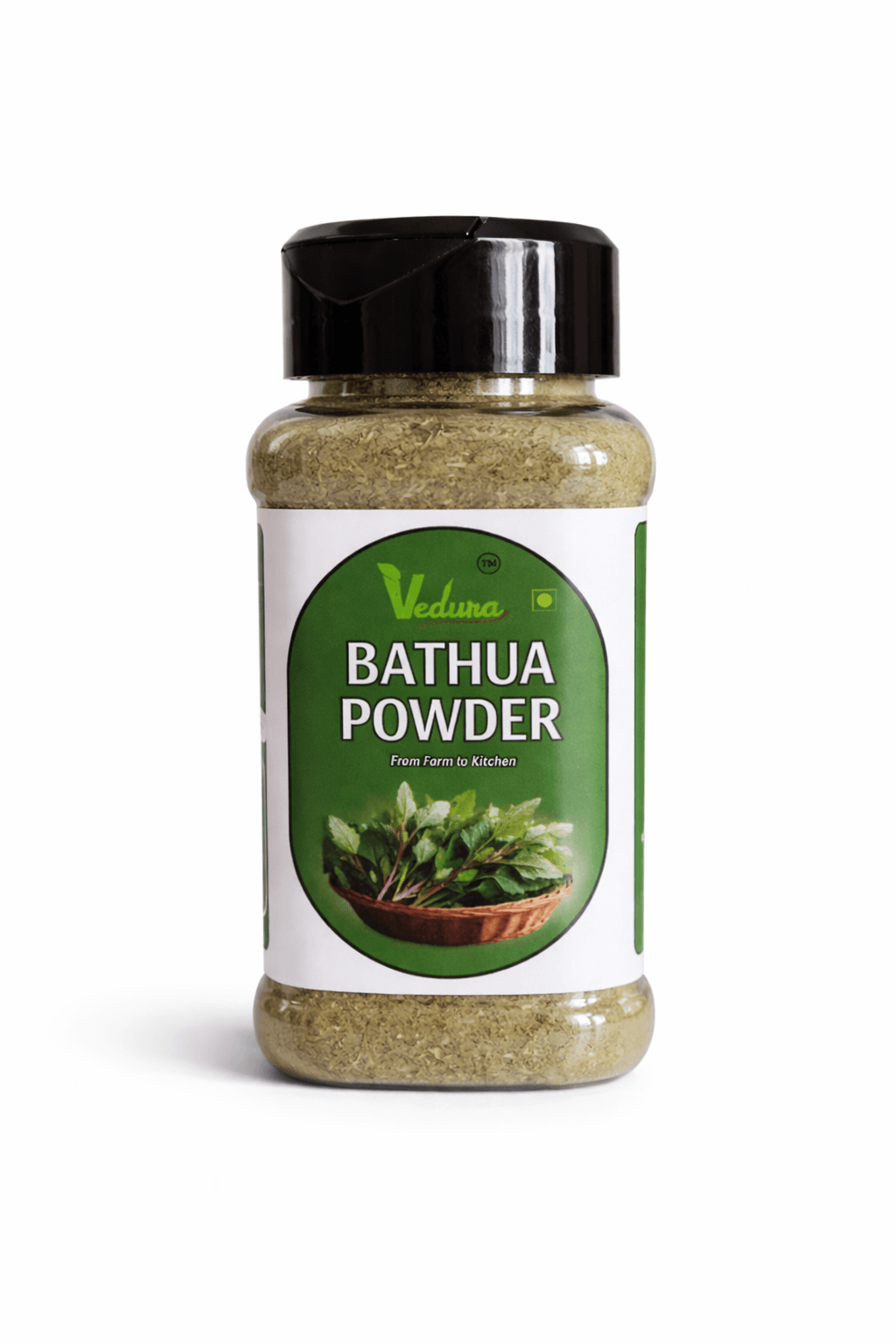
Moringa Powder (Rs 400-800/100g) vs Bathua Powder (Rs 150-200/50g)
Moringa has been aggressively marketed globally as a nutritional powerhouse - and its profile is genuinely impressive: high protein, calcium, Vitamin C, iron, and antioxidants.
Bathua (Chenopodium album), as covered extensively on this blog, has calcium content that rivals moringa's, comparable iron density, and similar micronutrient coverage - at roughly 30-40% of the cost, and with a cultural appropriateness in Indian cooking that moringa, for all its nutritional merit, does not naturally possess.
Verdict: Comparable nutritional profiles. Bathua wins on price, availability, and Indian culinary integration. Moringa wins on global marketing.
The Meta-Conclusion
Western superfoods are not fraudulent. Many of them are genuinely nutritious. The issue is not their quality. The issue is the implicit messaging that you need them - that Indian ingredients are somehow nutritionally inadequate and require supplementation by imported alternatives.
The data does not support this messaging. Indian food ingredients are among the most nutritionally dense in the world. They are less expensive, more culturally appropriate, and more sustainably produced than their imported competition.
The smartest health decision available to most Indian consumers is to learn more about what they already have.
Explore topics
Continue your Vedura journey
Explore product pages, practical recipes, and research-led explainers connected to this topic.
Comments
Be the first to comment.