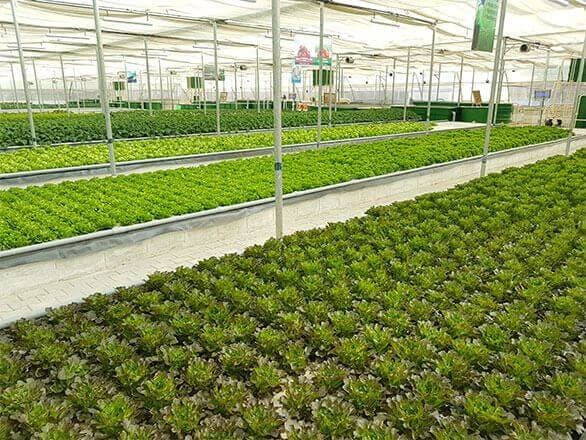

This evolution is shaped by several factors: increasing internet penetration in rural areas, rising farmer awareness, government push for digitalization, and the urgent need to address climate change impacts and food security. The focus is shifting from basic mechanization to data-driven decision-making, smart farming, and integrated solutions that connect farmers more directly to markets and financial services.
| Opportunity Area | Key Technologies/Models | Founder Focus | | :------------------------ | :---------------------------------------------------- | :---------------------------------------------------- | | **Primary Processing** | Small-scale processing units, sorting/grading tech | Decentralized processing hubs near farms | | **Storage Solutions** | IoT-enabled silos, controlled atmosphere storage | Smart storage solutions for grains and perishables | | **Value-Added Products** | Dehydration, milling, oil extraction, ready-to-eat | Developing new product lines from farm produce | | **Market Linkages** | B2B platforms for processed goods, export facilitation | Connecting value-added products to broader markets |
Quick Summary
India's agritech sector is set for significant growth by 2026, offering fertile ground for new founders. Key opportunity areas include optimizing supply chains, enhancing precision farm inputs, expanding agri-fintech solutions, improving post-harvest management, and strengthening traceability, all crucial for boosting farmer incomes and agricultural efficiency.
The Evolving Agritech Landscape in India
India's agricultural sector, a cornerstone of its economy, is undergoing a profound transformation driven by technology. Agritech, or agricultural technology, is no longer a niche but a critical enabler for efficiency, sustainability, and profitability across the value chain. As we look towards 2026, the landscape is ripe with opportunities for innovative founders ready to tackle persistent challenges and capitalize on emerging trends. The Ministry of Agriculture & Farmers Welfare has consistently emphasized the role of technology in achieving higher productivity and farmer welfare, laying a strong policy foundation for agritech growth.
This evolution is shaped by several factors: increasing internet penetration in rural areas, rising farmer awareness, government push for digitalization, and the urgent need to address climate change impacts and food security. The focus is shifting from basic mechanization to data-driven decision-making, smart farming, and integrated solutions that connect farmers more directly to markets and financial services.
Supply Chain Modernization: Connecting Farms to Markets
The Indian agricultural supply chain is notoriously fragmented and inefficient, leading to significant post-harvest losses and reduced farmer realizations. This area presents vast potential for tech-driven innovation.
Digital Marketplaces and Aggregation
Founders can focus on building robust digital platforms that connect farmers directly with buyers (retailers, food processors, exporters), bypassing multiple intermediaries. This includes platforms for specific produce categories, leveraging AI for demand forecasting and price discovery. Models could involve micro-warehousing networks, aggregation points with quality checks, and last-mile logistics solutions that reduce transit times and spoilage.
Cold Chain Logistics and Infrastructure
Despite progress, India's cold chain infrastructure remains inadequate. Opportunities exist in developing cost-effective, modular cold storage solutions at the farm gate or village level, powered by renewable energy. Furthermore, tech-enabled cold logistics services, including refrigerated transport tracking and optimized routing, can significantly reduce waste and maintain produce quality over long distances. Innovations in predictive maintenance for cold chain assets using IoT are also a promising frontier.
Precision Inputs and Farm Management: Boosting Yields Sustainably
Optimizing farm inputs like water, fertilizers, and pesticides is crucial for sustainable agriculture and higher yields. Precision agriculture leverages data and technology to tailor farming practices to specific field conditions.
IoT and Sensor-Based Solutions
Developing affordable Internet of Things (IoT) devices and sensor networks for soil health monitoring, weather forecasting, and crop disease detection offers immense value. These solutions can provide real-time data to farmers, enabling them to make informed decisions on irrigation schedules, nutrient application, and pest management. Founders can build platforms that integrate data from various sensors, drones, and satellite imagery to provide actionable insights.
AI-Powered Advisory and Automation
Artificial intelligence (AI) can power personalized crop advisory services, offering recommendations based on local conditions, crop variety, and historical data. Automation in farming, from precision spraying drones to robotic harvesting for specific crops, is another area with high growth potential, especially as labor costs rise and skilled labor becomes scarce. These tools can enhance resource efficiency and reduce environmental impact.
Agri-Fintech: Empowering Farmers with Capital and Risk Mitigation
Access to timely and affordable credit, insurance, and financial literacy remains a significant challenge for Indian farmers. Agritech can bridge these gaps.
Digital Lending and Credit Scoring
Founders can innovate in digital lending platforms that leverage alternative data points (e.g., land records, crop health data, market linkages) for more accurate credit scoring for farmers. This can unlock capital for small and marginal farmers who traditionally lack formal credit histories. Partnerships with existing financial institutions can accelerate adoption. The Reserve Bank of India (RBI) has encouraged digital financial inclusion, paving the way for such innovations.
Parametric Insurance and Risk Management
Traditional crop insurance often faces challenges in claims assessment and disbursement. Parametric insurance, which pays out based on pre-defined triggers like rainfall deficits or temperature extremes (monitored via satellite or weather stations), offers a faster, more transparent alternative. Startups can develop platforms for creating, distributing, and administering such insurance products, helping farmers mitigate climate-related risks more effectively.
Post-Harvest Management and Value Addition: Reducing Wastage, Increasing Income
India faces enormous post-harvest losses, estimated to be upwards of 15-20% for many perishables. Technology can transform this segment.
| Opportunity Area | Key Technologies/Models | Founder Focus |
| :------------------------ | :---------------------------------------------------- | :---------------------------------------------------- |
| Primary Processing | Small-scale processing units, sorting/grading tech | Decentralized processing hubs near farms |
| Storage Solutions | IoT-enabled silos, controlled atmosphere storage | Smart storage solutions for grains and perishables |
| Value-Added Products | Dehydration, milling, oil extraction, ready-to-eat | Developing new product lines from farm produce |
| Market Linkages | B2B platforms for processed goods, export facilitation | Connecting value-added products to broader markets |
Decentralized Processing Units
Setting up small-scale, decentralized processing units at the village or block level can help farmers convert raw produce into value-added products (e.g., spices, dehydrated vegetables, flour, oils). This reduces spoilage during transport and fetches better prices. Tech can enable efficient operation, quality control, and market access for these processed goods.
Waste-to-Wealth Solutions
Innovations around converting agricultural waste (stubble, husks, rotten produce) into useful products like bio-fertilizers, biogas, or animal feed present a significant circular economy opportunity. Technologies like pyrolysis, anaerobic digestion, and composting can be scaled for rural implementation.
Traceability and Quality Assurance: Building Trust
Consumers, both domestic and international, are increasingly demanding transparency about food origin and production practices. Traceability systems build trust and unlock premium markets.
Blockchain for Supply Chains
Blockchain technology offers an immutable and transparent ledger for tracking agricultural produce from farm to fork. Founders can develop blockchain-based platforms that record every step, including inputs used, farming practices, processing details, and logistics. This provides verifiable information on origin, quality, and organic certifications.
AI-Driven Quality Grading
Automated quality grading systems using computer vision and AI can standardize the assessment of produce based on size, color, ripeness, and defects. This reduces manual intervention, ensures consistency, and helps in better price realization for farmers. Such systems can be integrated at aggregation centers or processing units, as highlighted by reports from NITI Aayog on agricultural transformation.
FAQs
Q: What are the biggest challenges new agritech founders might face in India?
A: New agritech founders often face challenges such as limited digital literacy among farmers, fragmented landholdings, difficulty in scaling solutions across diverse agro-climatic zones, and securing adequate funding tailored to the agricultural sector's unique risks. Building trust and demonstrating tangible value to farmers are also critical initial hurdles.
Q: How can agritech startups ensure their solutions are affordable for small and marginal farmers?
A: Affordability can be addressed through several strategies: developing 'as-a-service' models, offering solutions on a pay-per-use basis, leveraging government subsidies for agricultural machinery or inputs, and designing low-cost, robust technologies suitable for rural environments. Community-based models where equipment or services are shared can also improve access.
Q: What role do government policies play in supporting Indian agritech?
A: Government policies are crucial. Schemes like the Agri-Infrastructure Fund, PM-KISAN, and initiatives promoting FPOs (Farmer Producer Organizations) create an enabling environment. Policies encouraging digital payments, promoting rural internet connectivity, and providing grants or incubators for agritech startups significantly boost innovation and adoption.
Q: Which regions in India are particularly promising for agritech innovation?
A: While agritech opportunities exist across India, states with strong agricultural bases and progressive policies often lead. States like Maharashtra, Karnataka, Telangana, and Uttar Pradesh have seen significant agritech activity due to diverse cropping patterns, existing tech ecosystems, and government support for agricultural modernization and digitalization.
Q: How can agritech founders integrate sustainability into their business models?
A: Integrating sustainability means designing solutions that minimize environmental impact and promote resource efficiency. This includes developing tools for precision irrigation, promoting organic farming inputs, reducing chemical usage, facilitating waste valorization, and building resilient supply chains that adapt to climate change. Sustainable practices can also unlock premium markets and attract impact investors.
Q: What kind of partnerships are most beneficial for agritech startups in India?
A: Strategic partnerships are key. Collaborating with Farmer Producer Organizations (FPOs) provides direct access to farmer groups. Partnering with government bodies, agricultural universities (like ICAR institutions), and financial institutions (such as NABARD for rural credit) can offer credibility, reach, and funding. Tie-ups with large food processors or retailers can also ensure market access for farmers.
Explore topics
Continue your Vedura journey
Explore product pages, practical recipes, and research-led explainers connected to this topic.
Comments
Be the first to comment.