
The magic of pudina raita masala lies in this synergy. The mint provides a natural cooling sensation that is particularly welcome during India's hot summers, while the other spices add layers of digestive comfort and flavor complexity. According to the Indian Council of Medical Research - National Institute of Nutrition (ICMR-NIN), herbs like mint have long been recognized in traditional Indian diets for their carminative properties, aiding digestion and soothing the gut. This makes mint-infused dishes, especially raita, a perfect accompaniment to rich Indian meals.
Here are some versatile uses and recommended ratios:
Quick Summary
Pudina Raita Masala is a highly versatile spice blend, extending its utility far beyond the traditional raita bowl. Its refreshing mint and balanced spices make it an essential ingredient for cooling summer drinks like chaas and buttermilk, enhancing marinades for grilled dishes, and elevating a variety of curd-based accompaniments and snacks. This post explores its many uses, focusing on optimal ratios and the cooling benefits of mint.
The Cooling Power of Pudina Raita Masala
Mint, or *pudina*, is celebrated across India not just for its invigorating aroma but also for its profound cooling properties, making it a staple in warm climates. When combined with a judicious blend of roasted cumin, black salt, dried ginger, and other select spices, as found in a well-crafted Pudina Raita Masala, it transforms ordinary dishes into refreshing culinary experiences.
The magic of pudina raita masala lies in this synergy. The mint provides a natural cooling sensation that is particularly welcome during India's hot summers, while the other spices add layers of digestive comfort and flavor complexity. According to the Indian Council of Medical Research - National Institute of Nutrition (ICMR-NIN), herbs like mint have long been recognized in traditional Indian diets for their carminative properties, aiding digestion and soothing the gut. This makes mint-infused dishes, especially raita, a perfect accompaniment to rich Indian meals.
Why Cooling Ingredients Matter in Indian Cuisine
Indian culinary traditions are deeply intertwined with the climate. Ingredients are often chosen not just for taste but for their physiological effects. Curd, for instance, is inherently cooling, and when paired with mint and spices, it becomes a powerful antidote to heat, both external and internal. This blend enhances the curd's natural ability to regulate body temperature and aid digestion, embodying the wisdom of ancient Indian food science.
Beyond the Bowl: Versatile Uses and Perfect Ratios
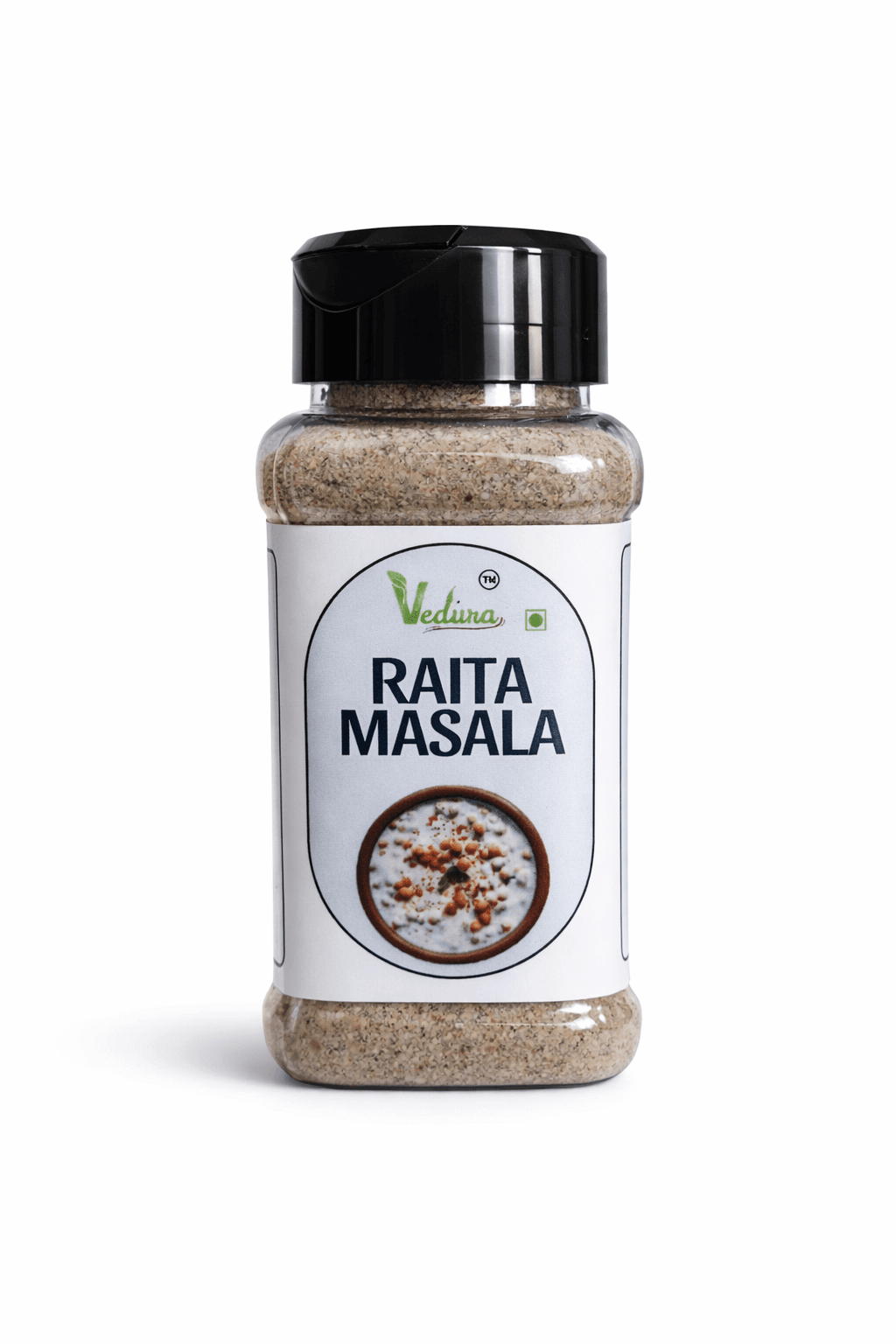
While its name suggests a primary role in raita, pudina raita masala is a secret weapon for countless dishes. Its balanced profile allows it to integrate seamlessly into various preparations, adding a burst of flavor and a touch of cooling freshness. For consistent taste and convenience, a high-quality blend like Vedura's Pudina Raita Masala (available at https://www.vedurafoods.com/product/pudina-raita-masala) ensures you have the perfect balance of spices ready.
Here are some versatile uses and recommended ratios:
1. Classic Raitas
* Use: Whisked into plain curd with chopped cucumber, onion, boondi, or tomato.
* Ratio: 1 to 2 teaspoons per cup (200g) of whisked curd, adjusting to taste.
2. Refreshing Buttermilk (Chaas) and Lassi
* Use: Stirred into a blend of curd and water for a savory chaas, or a slightly thicker lassi.
* Ratio: 1/2 to 1 teaspoon per glass (250ml) of buttermilk/lassi.
3. Flavorful Marinades
* Use: Combine with curd, ginger-garlic paste, and a touch of oil for marinating paneer, chicken, fish, or vegetables before grilling, baking, or pan-frying.
* Ratio: 1 to 2 tablespoons per 250g of protein or vegetables.
4. Salad Dressings and Dips
* Use: Whisk into a base of olive oil, lemon juice, or yogurt for a zesty, minty dressing. Can also be added to hummus or other dips.
* Ratio: 1/2 to 1 teaspoon per 1/4 cup of dressing/dip base.
5. Roasted Vegetables and Snacks
* Use: Sprinkle over potatoes, sweet potatoes, or other root vegetables before roasting, or dust over fried snacks like pakoras or cutlets post-frying.
* Ratio: A generous sprinkle, about 1 teaspoon per 200g of vegetables/snacks.
Crafting Refreshing Raitas with Pudina Raita Masala
Beyond the basic cucumber or boondi raita, this masala elevates a range of curd-based accompaniments. The key is to start with fresh, thick curd for the best texture and taste.
1. Simple Cucumber Raita: Grate half a cucumber, squeeze out excess water. Whisk 1 cup fresh curd until smooth. Add the grated cucumber and 1.5 teaspoons of pudina raita masala. Mix well, garnish with fresh mint leaves.
2. Boondi Raita: Soak 1/4 cup boondi in warm water for 2 minutes, then drain. Whisk 1 cup curd, add the drained boondi and 1 teaspoon pudina raita masala. Season with a pinch of black salt if desired. This provides a delightful crunch.
3. Onion-Tomato Raita: Finely chop half an onion and a small tomato. Whisk 1 cup curd, add the chopped vegetables and 1.5 teaspoons of masala. A light tempering of mustard seeds and curry leaves can elevate this further.
Remember, the freshness of your ingredients, especially the curd, is paramount. The Food Safety and Standards Authority of India (FSSAI) emphasizes the importance of using high-quality, fresh dairy products for health and taste.
Cooling Beverages for Indian Summers
When the mercury rises, nothing quite compares to a glass of homemade chaas or a cooling drink infused with mint. Pudina raita masala is your shortcut to these refreshing concoctions.
Classic Savory Chaas
* Ingredients: 1 cup fresh curd, 1 cup chilled water, 1/2 to 1 teaspoon pudina raita masala, a pinch of black salt (optional), a few ice cubes.
* Method: Blend curd and water until smooth. Add pudina raita masala and black salt. Blend briefly again. Pour over ice, garnish with fresh mint or a pinch of roasted cumin powder. This is an instant cooler and digestive aid.
Minty Lemonade Twist
* Ingredients: Juice of 1 lemon, 1 glass chilled water, 1 teaspoon sugar (or to taste), 1/4 teaspoon pudina raita masala, a few mint leaves.
* Method: Dissolve sugar in a little warm water. Combine lemon juice, chilled water, sugar syrup, and pudina raita masala. Stir well. Add ice and mint leaves for an extra refreshing kick. The masala adds an unexpected savory-minty depth to the sweet-sour lemonade.
Elevating Marinades and Snacks
Pudina raita masala's aromatic profile makes it an excellent addition to marinades, imparting a unique flavor that stands out from typical spice blends. It brings a subtle tang and a vibrant mint note, perfect for grilled items.
Paneer Tikka Marinade
* Ingredients: 1/2 cup thick curd, 1.5 tablespoons pudina raita masala, 1 tablespoon ginger-garlic paste, 1 teaspoon red chilli powder (optional), 1 teaspoon oil, 200g paneer cubes, chopped bell peppers and onions.
* Method: Whisk curd, masala, ginger-garlic paste, chilli powder, and oil. Add paneer cubes and vegetables, ensuring they are well coated. Marinate for at least 30 minutes (or up to 4 hours in the refrigerator). Skewer and grill or bake until golden brown.
Roasted Root Vegetables
* Ingredients: 2 cups chopped potatoes, carrots, or sweet potatoes, 1 tablespoon oil, 1 teaspoon pudina raita masala, salt to taste.
* Method: Toss vegetables with oil, pudina raita masala, and salt. Spread on a baking tray. Roast in a preheated oven at 200°C (390°F) for 25-35 minutes, or until tender and lightly charred, flipping halfway through. The masala adds a delightful, earthy mint flavor.
Quick Snack Dusting
For an instant flavor boost, sprinkle a pinch of pudina raita masala over plain potato chips, popcorn, or even a simple fruit salad with cucumber and pineapple. The blend provides a zingy, cool counterpoint to these everyday snacks.
FAQs
Q: What is pudina raita masala typically made of?
A: Pudina raita masala is generally a blend of dried mint leaves (pudina), roasted cumin powder, black salt (kala namak), dried ginger, and sometimes other spices like black pepper or asafoetida. The precise combination varies but aims for a balanced, refreshing, and slightly tangy flavor profile.
Q: Can I use pudina raita masala in vegan recipes?
A: Absolutely. While traditionally used with dairy curd, pudina raita masala can be perfectly integrated into vegan recipes. Simply substitute dairy curd with plant-based alternatives like cashew curd, almond curd, or soy yogurt for raitas, chaas, and marinades. The masala's flavor profile complements these alternatives beautifully.
Q: How long can I store homemade pudina raita masala?
A: If you make your own, store it in an airtight container in a cool, dark place. It generally retains its potency for up to 3-4 months. Commercially packaged blends, like those from Vedura Foods, usually have a longer shelf life due to optimized processing and packaging, typically around 6-12 months from the manufacturing date.
Q: Is pudina raita masala spicy?
A: Generally, pudina raita masala is not intensely spicy. It focuses more on a cooling, tangy, and aromatic profile. While it may contain a hint of black pepper or dried ginger for warmth, its primary characteristic is the refreshing taste of mint and cumin. If you prefer more heat, you can always add a pinch of red chilli powder to your dish.
Q: Can pudina raita masala be used in cooking beyond cold dishes?
A: Yes, it's quite versatile. While excellent in cold dishes, it can also enhance warm preparations. Consider adding a pinch to lentil soups (dal), vegetable stir-fries, or even some rice dishes like pulav for a unique minty undertone. It can also be sprinkled over roasted vegetables or used in dry rubs for grilled meats.
Q: What are the health benefits of mint in raita?
A: Mint (pudina) is known for several health benefits. It is a natural digestive aid, helping to relieve indigestion and bloating. It also has anti-inflammatory and antioxidant properties. When combined with curd in raita, it not only adds a refreshing flavor but also contributes to gut health and overall well-being, especially during hot weather.
Explore topics
Continue your Vedura journey
Explore product pages, practical recipes, and research-led explainers connected to this topic.
Comments
Be the first to comment.