The world is not calmer than it was five years ago. The geopolitical landscape of 2025 - ongoing conflicts in multiple regions, accelerating climate disruption, supply chain fragility exposed by pandemic and war, rising nationalism reshaping trade relationships - is genuinely more uncertain than any comparable period in recent memory.
In this environment, a growing number of people are asking a question that seems simple but has a surprisingly deep answer: what should I actually eat?
In a World of Global Uncertainty, Local Food Is the Most Radical Act of Stability
The world is not calmer than it was five years ago. The geopolitical landscape of 2025 - ongoing conflicts in multiple regions, accelerating climate disruption, supply chain fragility exposed by pandemic and war, rising nationalism reshaping trade relationships - is genuinely more uncertain than any comparable period in recent memory.
In this environment, a growing number of people are asking a question that seems simple but has a surprisingly deep answer: what should I actually eat?
The global industrial food system that most people in middle-income countries now depend on - complex supply chains, multiple countries of origin for every ingredient, logistic infrastructure that assumes stable geopolitical conditions - was designed for a world of stable globalisation. That world is under stress.
The alternative is not a rejection of modernity. It is a recovery of a principle that predates industrialisation and that traditional food cultures - including Indian food culture - practiced as a matter of course: eat what grows near you.
What "Local" Actually Means for India
For India, "local" food is not a dietary restriction or an elite lifestyle choice. It is, in practice, one of the most abundant, varied, and nutritionally complete food systems on earth.
The subcontinent grows: every major dal and legume variety. Every spice required for complex cooking. Dozens of varieties of leafy greens with exceptional nutritional profiles. Staple grains in adequate supply. Dairy from a domestically managed supply chain. Fruits and vegetables across every season.
A diet built on Indian ingredients is a local diet. It requires no imports for completeness, no dependency on foreign supply chains for nutritional adequacy, and no compromise in flavour or culinary sophistication.
The Indian food tradition is the "eat local" philosophy at its fullest possible development - a cuisine of extraordinary complexity, depth, and nutritional intelligence built entirely from what the subcontinent produces.
The Stability of Old Knowledge
When supply chains break down, the knowledge that matters is not the knowledge of how to order delivery or navigate a supermarket. It is the knowledge of how to cook with what is available - to take dal, spices, greens, and grain and produce a nourishing meal with confidence and intention.
This knowledge exists in Indian cooking tradition in extraordinary depth. There is a recipe for every season's surplus, a preparation for every ingredient's character, a spice combination for every nutritional and flavour goal. This is not a cookbook's worth of knowledge. It is a civilisational archive.
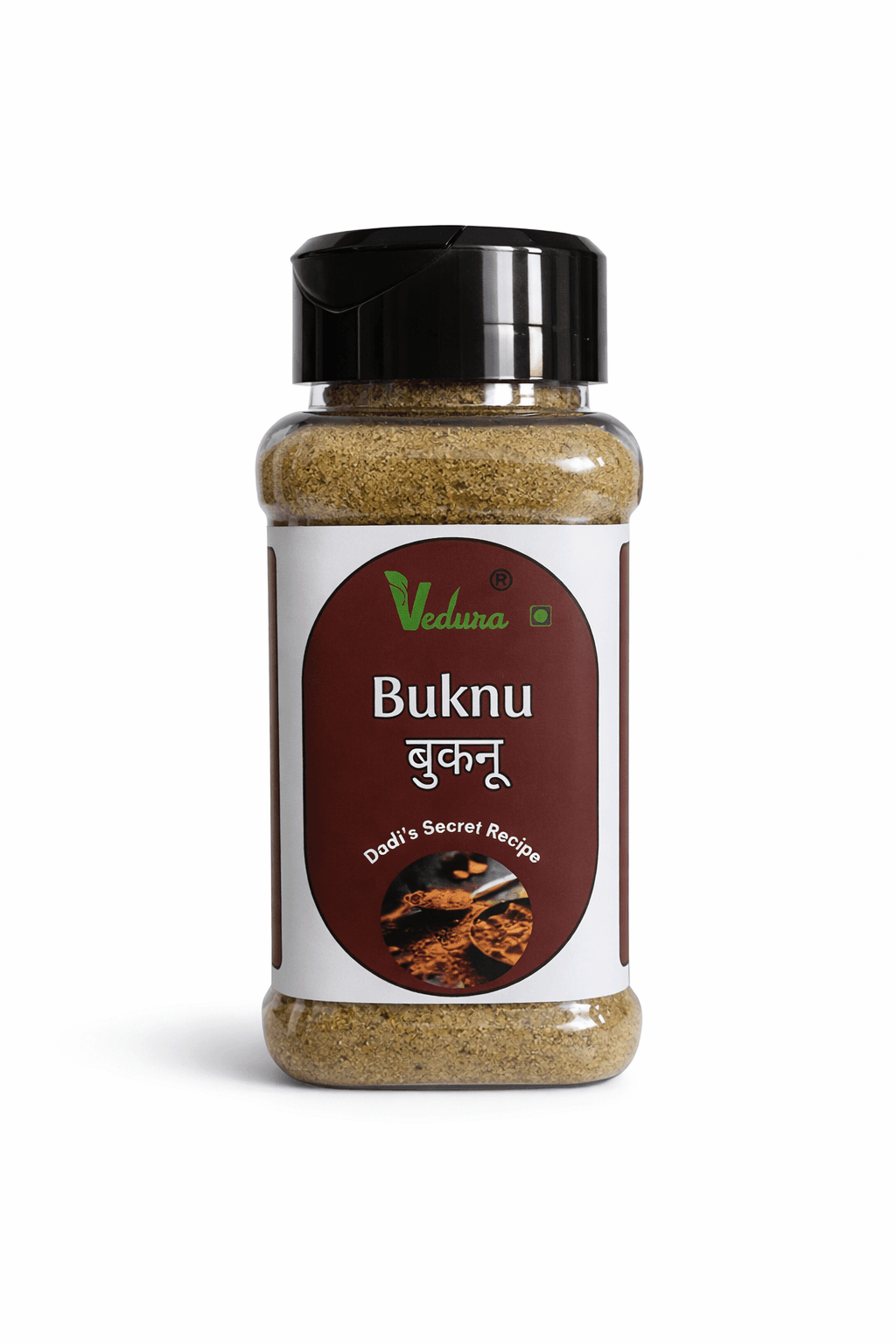
The households that carry this knowledge - that cook dal regularly, that know how to use bathua and sarso, that understand that turmeric finishes a dish rather than starting it, that can make Buknu work - are genuinely more food-resilient than those who depend on the continuous availability of a global supply chain for every meal.
The Dehydrated Greens as a Philosophy Made Practical
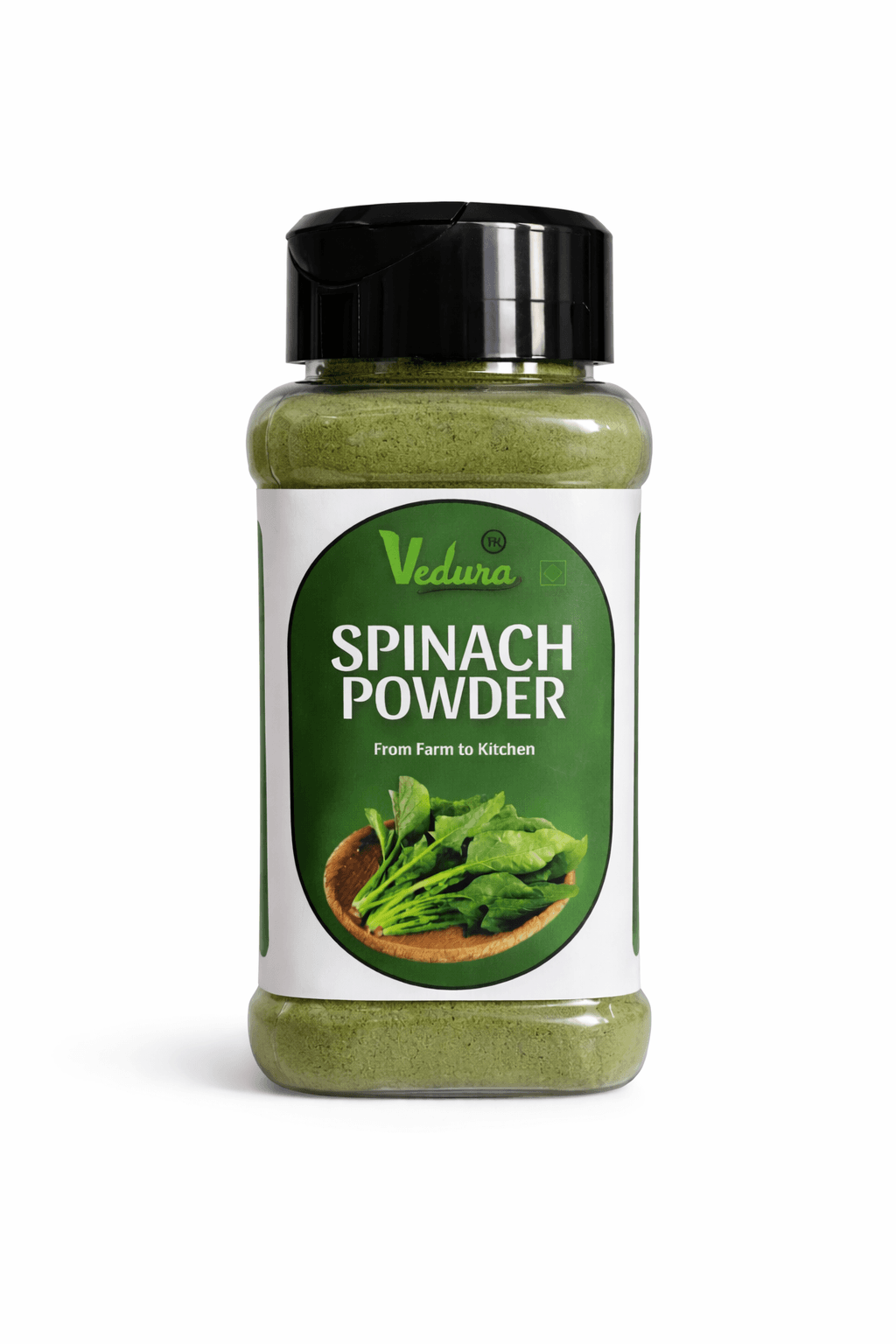
The decision to keep dehydrated spinach powder, methi powder, sarso powder, and coriander powder in a kitchen pantry is, in isolation, a small practical choice. In the context of this article, it is a small embodiment of a larger principle.
It is the principle that nutritional continuity should not be entirely dependent on what is available fresh today. That the abundance of one season should be preserved for the scarcity of another. That food security at the household level is built through reserves and shelf-stable nutrition, not just through the assumption that the market will always supply.
This is how Indian kitchens were stocked for centuries before refrigerators and delivery apps created the illusion that supply is infinite and immediate.
The illusion is under strain in 2025. The principle it replaced is as valid as it has always been.
A Final Thought
There is a version of the current global moment that is alarming, and there is a version that is clarifying. The alarming version focuses on the conflict, the disruption, and the uncertainty. The clarifying version notices that the uncertainty has made visible what was always true: that the most stable, most nourishing, most satisfying diet for an Indian person is the one built on Indian food.
The spices that grew here. The greens that grow here. The dals that have fed this subcontinent for thousands of years. The traditions that encoded nutritional wisdom in recipes and habits long before nutrition science had language for it.
Global uncertainty is a reason to reach for what is genuinely yours. For India, what is genuinely yours is remarkable.
Use it.
Explore topics
Continue your Vedura journey
Explore product pages, practical recipes, and research-led explainers connected to this topic.
Comments
Be the first to comment.