
The tomato crisis of 2023 was treated in Indian media as a curiosity - a dramatic but temporary price spike that saw tomatoes selling for Rs 250 per kg in some retail markets. The coverage was mostly comic: "gold tomatoes," Twitter jokes about tomato theft, enterprising vendors selling individual tomatoes.
What it actually was, and what similar events in 2024-25 represent, is a concrete demonstration of how climate disruption is affecting the Indian food system in ways that are accelerating and that are not primarily funny.
Climate Change Is Already Raising India's Food Prices. Here's the Evidence.
The tomato crisis of 2023 was treated in Indian media as a curiosity - a dramatic but temporary price spike that saw tomatoes selling for Rs 250 per kg in some retail markets. The coverage was mostly comic: "gold tomatoes," Twitter jokes about tomato theft, enterprising vendors selling individual tomatoes.
What it actually was, and what similar events in 2024-25 represent, is a concrete demonstration of how climate disruption is affecting the Indian food system in ways that are accelerating and that are not primarily funny.
The Climate Events Reshaping Indian Agriculture
Unseasonal rainfall: The 2023 monsoon was characterised by extreme variability - deficient in traditional rain-dependent farming regions, flooding in others. The pattern has repeated with variations in 2024-25. Tomato, onion, and potato crops - all heavily weather-dependent - have shown greater price volatility over the past three years than in any comparable previous period.
Heat stress during critical growth periods: The 2022 wheat heat wave event (described in the Russia-Ukraine blog) was not an isolated event. April and May temperatures across North India have shown a consistent upward trend, creating recurring risk to the rabi (winter) crop harvest during critical grain-filling periods. A 1C increase in temperature during the wheat grain-filling period is estimated to reduce yields by 4-5%.
Changing monsoon timing: The Indian monsoon is the foundation of Indian agricultural production. Delayed onset, early withdrawal, and spatial variability in rainfall distribution each create different crop failure patterns. The agricultural calendar that Indian farmers have followed for generations is no longer a reliable predictor.
Glacier retreat in Himalayan watersheds: The rivers that provide irrigation water for Punjab, Haryana, Uttar Pradesh - India's most productive agricultural states - depend on Himalayan glacier melt. Accelerating glacier retreat creates a medium-term water availability challenge for North Indian agriculture that is not yet a crisis but is a trajectory.
The Crops Most and Least Vulnerable
High climate vulnerability (fresh, perishable):
- Tomatoes, onions, potatoes: price volatility directly tied to rainfall timing
- Fresh leafy greens: production seasons shortening in some regions, lengthening in others with unpredictable results
- Fresh fruits: unseasonal flowering and frost events disrupting mango, apple, and citrus harvests
Lower climate vulnerability (dry, shelf-stable):
- Dal and legumes: more drought-tolerant than most crops, shelf-stable
- Whole spices: turmeric, cumin, coriander - drought-tolerant crops with good post-harvest stability
- Dehydrated greens: the dehydration process removes climate vulnerability from the ingredient entirely - you are consuming a product made from a specific harvest under specific conditions, not dependent on current season performance
Dehydration as Climate Adaptation Technology
This is a point that does not receive adequate attention: dehydration is one of the oldest and most effective climate adaptation strategies available to food systems.
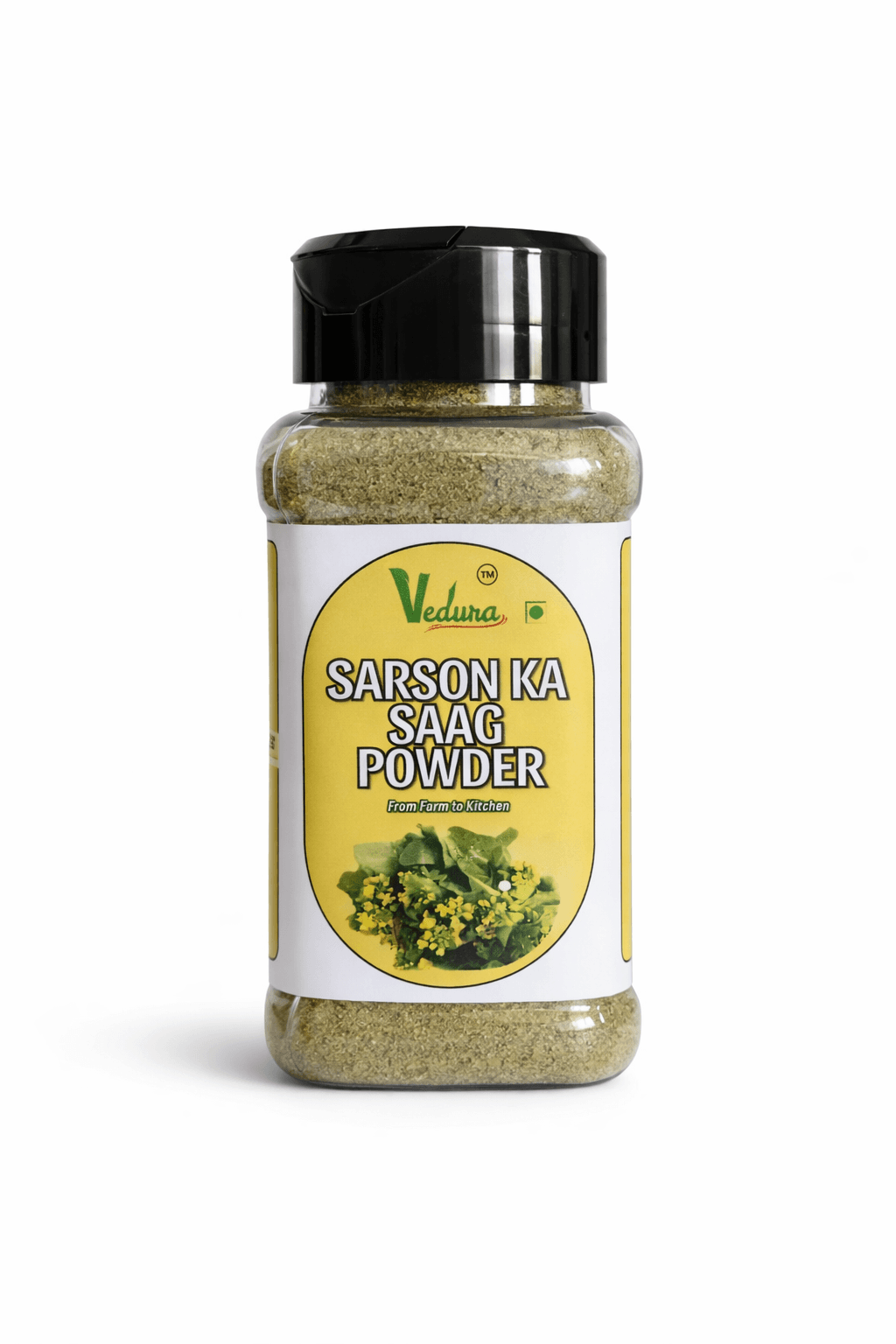
When sarso ka saag has a good harvest, dehydrating the surplus captures that nutritional value in a form that is available regardless of what the following year's weather does. When coriander has a bumper crop, drying it ensures that the price spike months later - when fresh coriander is scarce due to failed rains - does not eliminate it from the diet of households who rely on it for nutrition.
The traditional Indian practice of making dried spices, dried greens, and shelf-stable pantry items was, among other things, a climate risk management strategy. The agricultural year is variable. The pantry absorbs that variability and provides nutritional continuity regardless of what the weather does.
In a 2025 context of increasing climate volatility, this traditional practice is not nostalgia. It is smart adaptation.
What Households Can Control
Individual households cannot control the monsoon. They cannot reverse glacier retreat or reduce heat wave frequency. What they can control is the composition of their own food supply and its exposure to the climate disruption that is creating price volatility in specific categories.
Move consumption toward climate-resilient ingredients: Spices, dals, dehydrated greens - these provide comparable nutrition to their fresh equivalents with dramatically lower price volatility.
Build purchasing patterns that absorb price spikes: A household that buys dehydrated coriander powder for daily use and fresh coriander when it is cheap and abundant is insulated from the price spikes that climate disruption creates.
Seasonal bulk-buying of dehydrated forms: When fresh greens are in peak season and at lowest cost, this is the moment to buy - and the moment when dehydrated producers lock in their best-quality ingredient. The household that buys sarso powder made from January Punjab mustard greens is getting peak-season nutrition regardless of what the weather does in June.
Climate change is real, it is already affecting your food costs, and the response available to you is specific and practical. The traditional Indian pantry - built around shelf-stable, domestically produced, climate-resilient ingredients - is not just culturally relevant in 2025. It is ecologically rational.
Explore topics
Continue your Vedura journey
Explore product pages, practical recipes, and research-led explainers connected to this topic.
Comments
Be the first to comment.