India is one of the world's largest exporters of spices, shipping record value in recent years. For quality-focused MSMEs, exports are a genuine diversification channel - often at price premiums that the domestic market simply does not offer. But exporting is a documentation-heavy, compliance-first business. This guide lays out the path in the order you should tackle it.
The Agricultural and Processed Food Products Export Development Authority (APEDA) registration is your entry point for exporting most agricultural and processed foods. Prerequisites: - Import Export Code (IEC) from DGFT - PAN - GST registration - FSSAI license (see our [FSSAI guide](/blogs/fssai-registration-small-food-business-india-guide)) - A current bank account with a SWIFT code for international payments
Exporting Indian Spices and Food Products: The Beginner's Guide for 2025
India is one of the world's largest exporters of spices, shipping record value in recent years. For quality-focused MSMEs, exports are a genuine diversification channel - often at price premiums that the domestic market simply does not offer. But exporting is a documentation-heavy, compliance-first business. This guide lays out the path in the order you should tackle it.
Step 1: APEDA Registration
The Agricultural and Processed Food Products Export Development Authority (APEDA) registration is your entry point for exporting most agricultural and processed foods. Prerequisites:
- Import Export Code (IEC) from DGFT
- PAN
- GST registration
- FSSAI license (see our FSSAI guide)
- A current bank account with a SWIFT code for international payments
APEDA registration is completed online with a one-time fee, and the certificate is valid for five years.
Step 2: Target Market Fit
Not every market suits a first-time exporter. Match your product and capacity to the market's demands:
- United States: strong premium and diaspora demand, but stricter importer compliance and FDA expectations
- UK and EU: rigorous pesticide-residue limits and high documentation standards
- UAE and the Gulf: logistics advantage from proximity and very strong diaspora consumption
- Australia and Canada: often good first export markets for MSMEs, with manageable entry requirements
For most newcomers, the Gulf or a diaspora-heavy market is an easier place to learn the mechanics before attempting the EU.
Step 3: Core Export Documentation
Every shipment needs a clean documentation set. Get familiar with:
- Commercial invoice and packing list
- Certificate of Origin
- Phytosanitary certificate (for plant-based products)
- Certificate of Analysis or health certificate
- Bill of Lading or Airway Bill
- Organic transaction certificates, if you make an organic claim
Buyers judge a new supplier partly on how clean and complete the paperwork is. Sloppy documentation signals risk and kills repeat orders.
Step 4: APEDA Support Programs
APEDA does more than register you. It offers:
- Market Development Assistance to subsidise participation in global trade fairs
- Certification support to help meet international quality standards
- Infrastructure support for export-linked processing and packing facilities
These programs meaningfully lower the cost of your first serious export push.
The Premium Pricing Reality
The reason to export is margin, and the route to export premiums is always the same: verified quality, traceability back to the farm, and credible certification. A generic, untraceable commodity competes only on price; a certified, single-origin, well-documented product competes on trust - and earns far more.
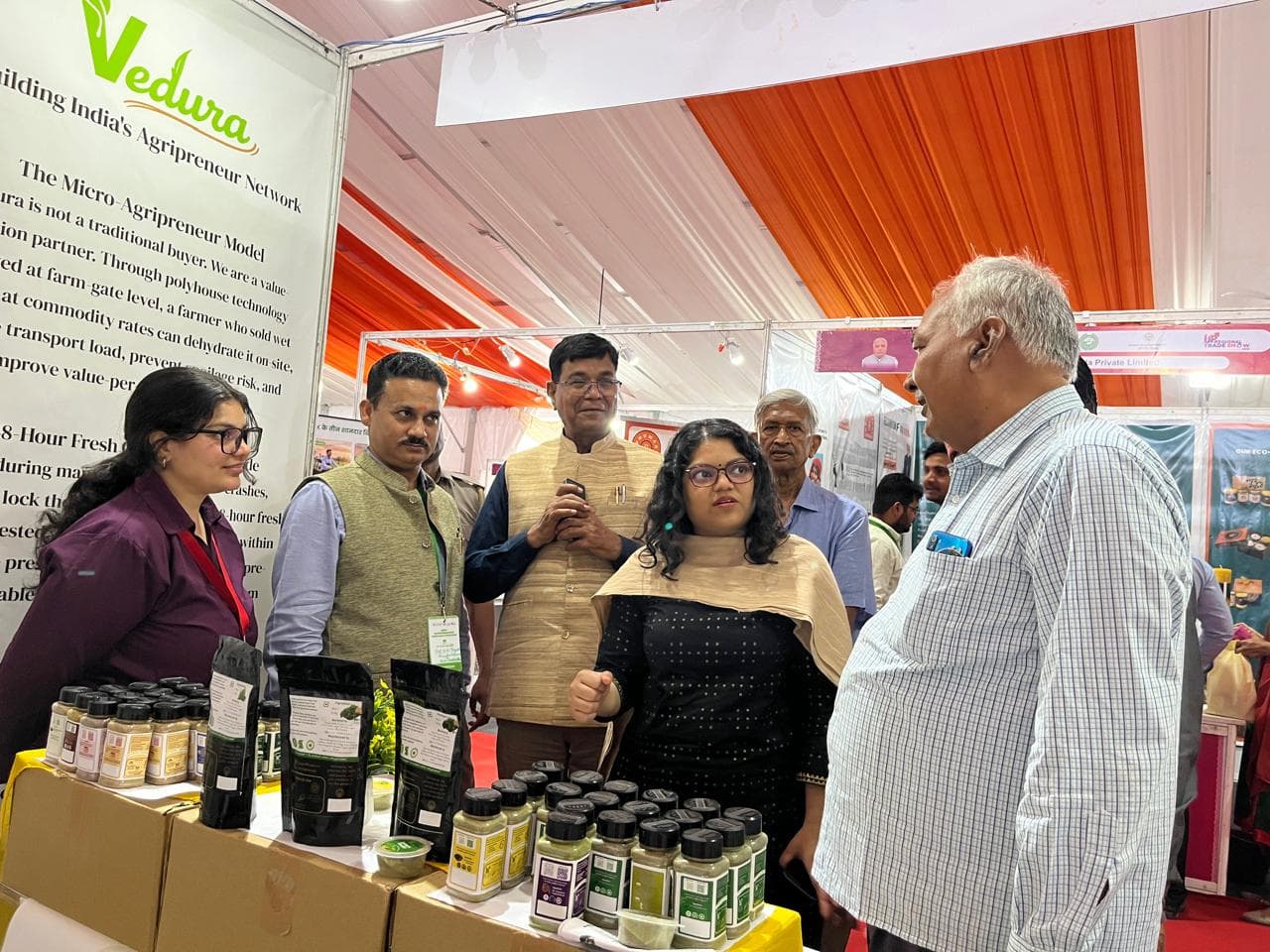
This farm-to-shelf traceability is the same foundation behind Vedura's own range of natural spices and dehydrated greens.
Your First Move
Get your IEC and APEDA registration in place, then validate one product in one market before scaling. A single well-executed shipment that earns a reorder teaches you more than a dozen speculative inquiries.
FAQs
What is APEDA registration and do I need it to export spices?
APEDA registration is required to export most scheduled agricultural and processed-food products from India, including spices. It is done online and valid for five years.
What is an IEC and where do I get it?
The Import Export Code is issued by the DGFT and is mandatory for any export or import business in India.
Which is the easiest market for a first-time Indian food exporter?
The Gulf and diaspora-heavy markets are often the most accessible entry points, with strong demand and manageable compliance compared to the EU.
How do exporters command premium prices?
Through verified quality, farm-level traceability, and recognised certification, which let a product compete on trust rather than on commodity price alone.
Explore topics
Continue your Vedura journey
Explore product pages, practical recipes, and research-led explainers connected to this topic.
Comments
Be the first to comment.