Turmeric has been the most talked-about food ingredient globally for over a decade. The research on its primary active compound - curcumin - is now vast. Over 10,000 published studies. Multiple clinical trials. Pharmaceutical companies attempting to patent curcumin derivatives.
But the question most people actually have is simpler: if I start eating turmeric every day, what will I actually notice, and when?
10 Things That Happen to Your Body When You Eat Turmeric Every Day
Turmeric has been the most talked-about food ingredient globally for over a decade. The research on its primary active compound - curcumin - is now vast. Over 10,000 published studies. Multiple clinical trials. Pharmaceutical companies attempting to patent curcumin derivatives.
But the question most people actually have is simpler: if I start eating turmeric every day, what will I actually notice, and when?
Here is what the research shows, organised by the timeline you can expect.
Days 1-7: Digestive Changes
1. Reduced bloating and gas
Curcumin stimulates bile production in the gallbladder. Bile is essential for fat digestion, and better fat digestion means less fermentation of undigested fats in the gut - which means less gas and bloating. Most people with habitual digestive discomfort notice this change within the first week.
2. More regular bowel movements
Curcumin's anti-inflammatory effect on the gut lining reduces the low-level intestinal inflammation that contributes to irregular digestion. Not a dramatic effect for everyone - but for those with mild chronic gut discomfort, it is often the first thing they notice.
Days 7-14: Inflammation Markers
3. Reduction in joint stiffness
Curcumin inhibits multiple inflammatory signalling pathways - including COX-2, the same pathway targeted by ibuprofen. For people with mild joint inflammation, morning stiffness, or exercise-induced muscle soreness, consistent daily curcumin begins producing measurable anti-inflammatory effects within 7-14 days. Clinical trials in rheumatoid arthritis populations show significant symptom reduction with consistent use.
4. Headache frequency may reduce
Several small trials suggest curcumin reduces the frequency of tension headaches in people who experience them regularly. The mechanism is likely related to its anti-inflammatory and COX-2 inhibiting properties. Not universal - but worth noticing if headaches are a pattern for you.
Days 14-21: Metabolic Changes
5. Blood sugar stability improves
Curcumin has demonstrated insulin-sensitising effects in multiple trials - helping cells respond more efficiently to insulin and resulting in a smoother blood glucose curve after meals. People with pre-diabetes or family history of Type 2 diabetes who consume turmeric consistently over two to three weeks sometimes notice reduced post-meal energy crashes.
6. Cholesterol profile shifts
Studies have shown modest but consistent reductions in LDL cholesterol and triglycerides with consistent curcumin consumption over 2-4 weeks. The effect is not dramatic (this is food, not medication) but it is measurable in clinical trials.
Days 21-30: Systemic Changes
7. Skin clarity and glow
The improvement in skin that many people attribute to haldi is real and research-supported. Curcumin's antioxidant properties reduce oxidative damage to skin cells. Its anti-inflammatory properties reduce subclinical facial inflammation that contributes to redness and uneven tone. The "haldi glow" is not mythology - it is biology.
8. Mood and cognitive clarity
This is the most surprising finding in curcumin research. Multiple trials have demonstrated significant effects on depression and anxiety symptoms - in some studies, comparable to pharmaceutical antidepressants in mild-to-moderate cases. The mechanism involves curcumin's ability to increase BDNF (Brain-Derived Neurotrophic Factor), a protein essential for neuron growth and mood regulation. Daily turmeric consumption for 3-4 weeks shows effects in this domain.
9. Reduced systemic inflammatory markers
Blood tests in curcumin supplementation trials consistently show reductions in CRP (C-Reactive Protein) - the primary blood marker of systemic inflammation - after 4 weeks of consistent consumption. You will not feel this directly, but it is the underlying mechanism behind most of the other effects listed here.
10. Immune system modulation
Curcumin's effects on the immune system are complex - it both supports immune activity against pathogens and reduces overactivation of inflammatory immune responses. Regular consumers report fewer and shorter mild illnesses over time. This is difficult to attribute to turmeric alone, but is consistent with the immunomodulatory research.
The Critical Variable: Bioavailability
All of these effects depend on curcumin actually being absorbed. Curcumin has poor intrinsic bioavailability. Two things dramatically increase it:
Black pepper (piperine): Increases curcumin absorption by up to 2000%. Turmeric and black pepper in the same meal is non-negotiable for maximum benefit.
Fat: Curcumin is fat-soluble. Consuming turmeric with a fat-containing food - ghee, oil, dairy - increases absorption substantially.
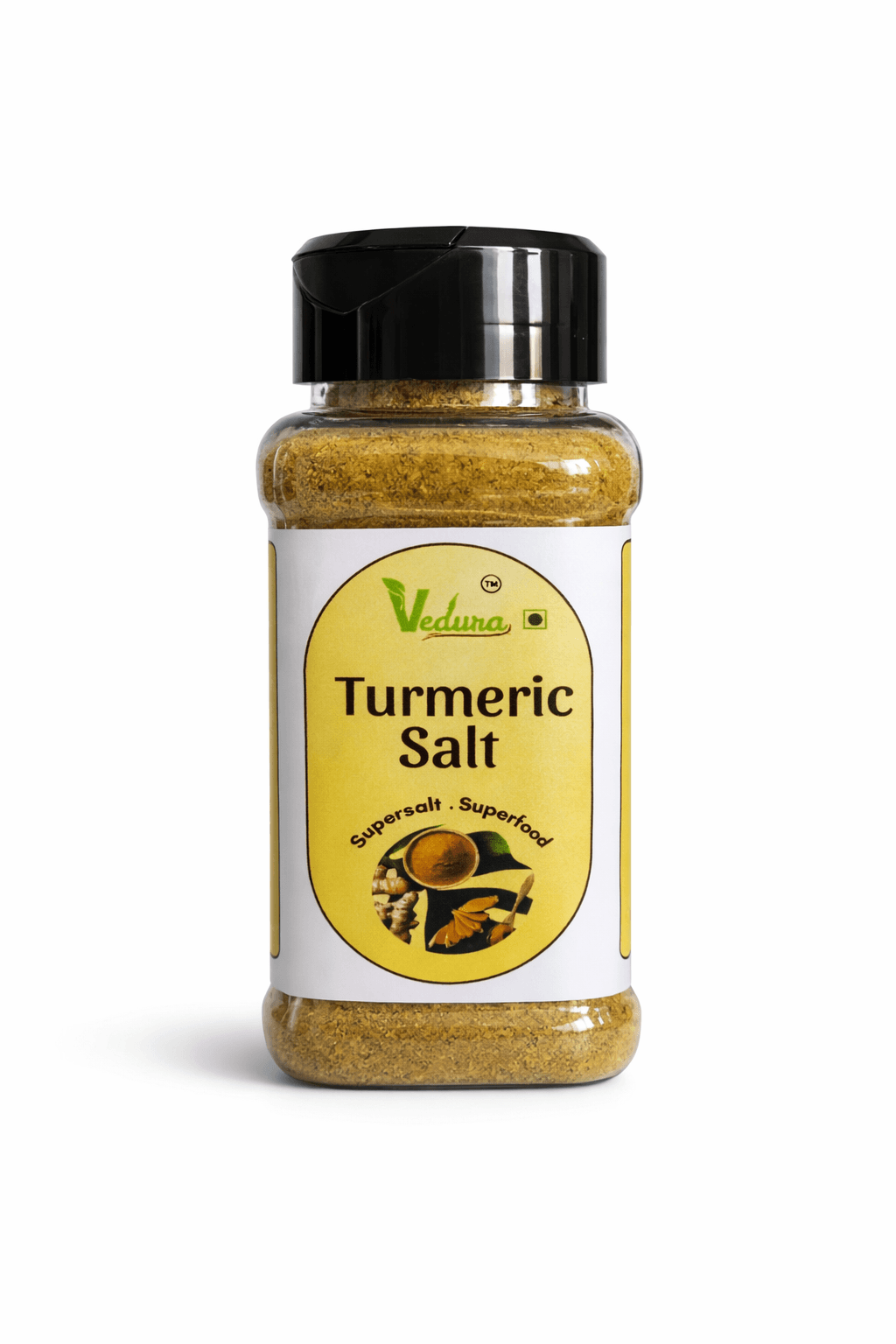
Turmeric salt used as a finishing seasoning over ghee-tempered dal, over oil-dressed vegetables, or dissolved into warm milk with black pepper and honey delivers curcumin in the absorption-optimised form.
Thirty days. Six to ten changes. The research supports every one of them.
Explore topics
Continue your Vedura journey
Explore product pages, practical recipes, and research-led explainers connected to this topic.
Comments
Be the first to comment.